


8" Sub Box


Thread Starter
|
Senior Member
Joined: Apr 2010
Posts: 455
Likes: 0
From: Hillsboro, OR
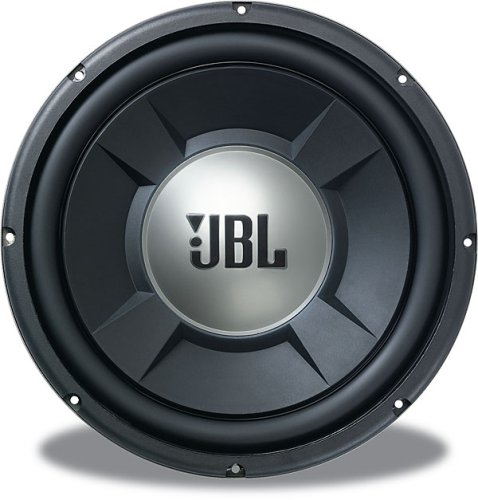
So I read a bunch of reviews and comparisons on this sub and it looked really good for the money. Should be here later this week. Now for an amp. Hopefully I can get one of these used. I need to buff up on my amp terminology though. What does bridged mean? If an amp has multiple channels does that mean you have to divide up the wattage by the number of channels or can you supply all the power to one channel if you want? Is there an easy way to check if an amp is still good without hooking it to a speaker?
How does this one look? Is it a good deal?
http://portland.craigslist.org/clc/ele/1712760689.html

Or this
http://portland.craigslist.org/clc/ele/1707556914.html

It will be powering one 8" 200W RMS 800W peak.
Last edited by Woods-Rider; Apr 27, 2010 at 11:45 PM.

Bridging means to use 2 channels to run one speaker. Commonly, 2 channel amplifiers can be bridged. The internal connections are seriesed, meaning you need to connect the negative of one channel and the positive of the other to a subwoofer. When you bridge an amplifier (something that can only be done with 2 or 4 channel amps), it will almost always work at a 4ohm load, no more, no less.
When an amp has multible channels, it will usually have some sort of power designation already multiplied by the amount of channels it operated on. For example: 100W x 2 @ 4ohms, 200W x 2 @ 2ohms, 400W x 1 @ 4ohms bridged...or...60W x 4 @ 4ohms, 120W x 4 @ 2ohms, 240W x 2 @ 4ohms bridged. Somewhere in the advertisement of an amplifier should have actual specs of how much an amplifier puts out per channel.
Clipping is something important that you should know about, if you already know then disregard. Sound is measured in frequencies, which if you can imagine is a nice curve going up and down. Clipping is when the top and the bottom of this curve is flat. When this happens, your amplifier is amplifying beyond it's threshold and is just making noise, which can damage your amplifier and possibly your subwoofer. This is why it's important to get an amplifier that the RMS rating is higher than the subwoofer's. There's another reason for this...
Headroom. The RCA wires coming from your radio to your amplifier have all kinds of sounds, including noise (which is the junk you don't want to hear like alternator whine and the common "hiss"). When your amplifier runs more RMS power than your subwoofer, you can tune the gain lower, which gives you good sound from the bass without aggressive signal amplification (including amplification of noise).
I can't think of any other "lingo" more important than those in terms of subwoofers when it comes to amplifiers, but I'm sure other people can define other important words as well. For the JBL subwoofer, try to get it in dual 4ohm or single 2ohm voice coil, this way you can get an amplifier that will push quite the power. Try searching online for an Alpine MRP-M300, it is a single-channel amplifier that runs 150Wrms x 1 @ 4ohms, 300Wrms x 1 @ 2ohms. Chances are you can find it relatively inexpensive. If it is only available in single 4ohm voice coil, then I suggest an Alpine MRP-M500 amplifier, I believe it's 300Wrms x 1 @ 4ohms, 500Wrms x 1 @ 2ohms. Honestly, you're better off getting a class D amplifier because they are much more efficient than class A and B amps (which are what your common 2 and 4 channel amps are). Class A and B produce far less distortion, but distortion is far less audible in bass than in the midrange and treble areas.
When an amp has multible channels, it will usually have some sort of power designation already multiplied by the amount of channels it operated on. For example: 100W x 2 @ 4ohms, 200W x 2 @ 2ohms, 400W x 1 @ 4ohms bridged...or...60W x 4 @ 4ohms, 120W x 4 @ 2ohms, 240W x 2 @ 4ohms bridged. Somewhere in the advertisement of an amplifier should have actual specs of how much an amplifier puts out per channel.
Clipping is something important that you should know about, if you already know then disregard. Sound is measured in frequencies, which if you can imagine is a nice curve going up and down. Clipping is when the top and the bottom of this curve is flat. When this happens, your amplifier is amplifying beyond it's threshold and is just making noise, which can damage your amplifier and possibly your subwoofer. This is why it's important to get an amplifier that the RMS rating is higher than the subwoofer's. There's another reason for this...
Headroom. The RCA wires coming from your radio to your amplifier have all kinds of sounds, including noise (which is the junk you don't want to hear like alternator whine and the common "hiss"). When your amplifier runs more RMS power than your subwoofer, you can tune the gain lower, which gives you good sound from the bass without aggressive signal amplification (including amplification of noise).
I can't think of any other "lingo" more important than those in terms of subwoofers when it comes to amplifiers, but I'm sure other people can define other important words as well. For the JBL subwoofer, try to get it in dual 4ohm or single 2ohm voice coil, this way you can get an amplifier that will push quite the power. Try searching online for an Alpine MRP-M300, it is a single-channel amplifier that runs 150Wrms x 1 @ 4ohms, 300Wrms x 1 @ 2ohms. Chances are you can find it relatively inexpensive. If it is only available in single 4ohm voice coil, then I suggest an Alpine MRP-M500 amplifier, I believe it's 300Wrms x 1 @ 4ohms, 500Wrms x 1 @ 2ohms. Honestly, you're better off getting a class D amplifier because they are much more efficient than class A and B amps (which are what your common 2 and 4 channel amps are). Class A and B produce far less distortion, but distortion is far less audible in bass than in the midrange and treble areas.
Thread Starter
|
Senior Member
Joined: Apr 2010
Posts: 455
Likes: 0
From: Hillsboro, OR
WOW! Thanks for all that info phattacorider.
The sub is:
8" Single 4 Ohms Grand Touring Series Subwoofer
Power Handling:
Peak: 800 watts
RMS: 200 watts
Impedance: Single 4 ohms
Polypropylene cone woofer
Hi-roll rubber surround
New proprietary frame and in-board motor structure
Vented polepieces
Frequency response: 30-400 Hz
Sensitivity: 90 dB
Is that 500W amp not enough for this sub since it has multiple channels? Isn't less distortion better, and if so woudlnt a class A or B be better? Should I be that concerned with the efficeincy of my amp since my system will be relatively small and not putting much of a strain on my electrical system?
The sub is:
8" Single 4 Ohms Grand Touring Series Subwoofer
Power Handling:
Peak: 800 watts
RMS: 200 watts
Impedance: Single 4 ohms
Polypropylene cone woofer
Hi-roll rubber surround
New proprietary frame and in-board motor structure
Vented polepieces
Frequency response: 30-400 Hz
Sensitivity: 90 dB
Is that 500W amp not enough for this sub since it has multiple channels? Isn't less distortion better, and if so woudlnt a class A or B be better? Should I be that concerned with the efficeincy of my amp since my system will be relatively small and not putting much of a strain on my electrical system?
Last edited by Woods-Rider; Apr 28, 2010 at 02:04 PM.

Senior Member
Joined: Jan 2010
Posts: 228
Likes: 0
From: Gulfport, MS
You can't hook that 500W amp up to your sub, it's a four channel, and you've only got a single voice coil to hook it to. (well you could use half of it, but it'll probably only do 100w rms anyways)
Look for a Class A/B 2 channel that bridged @ 4 ohms puts out 200+ watts RMS, or a Class D mono that does 200+ watts RMS at 4 ohms.
Look for a Class A/B 2 channel that bridged @ 4 ohms puts out 200+ watts RMS, or a Class D mono that does 200+ watts RMS at 4 ohms.
Senior Member
Joined: Jan 2010
Posts: 228
Likes: 0
From: Gulfport, MS

Senior Member
Joined: Jan 2010
Posts: 100
Likes: 0
A good read on the subject, and why it is generally better:
http://www.diymobileaudio.com/forum/...m-drivers.html
While this is probably a moot point for subwoofers, still good info!
I can't think of any other "lingo" more important than those in terms of subwoofers when it comes to amplifiers, but I'm sure other people can define other important words as well. For the JBL subwoofer, try to get it in dual 4ohm or single 2ohm voice coil, this way you can get an amplifier that will push quite the power. Try searching online for an Alpine MRP-M300, it is a single-channel amplifier that runs 150Wrms x 1 @ 4ohms, 300Wrms x 1 @ 2ohms. Chances are you can find it relatively inexpensive. If it is only available in single 4ohm voice coil, then I suggest an Alpine MRP-M500 amplifier, I believe it's 300Wrms x 1 @ 4ohms, 500Wrms x 1 @ 2ohms. Honestly, you're better off getting a class D amplifier because they are much more efficient than class A and B amps (which are what your common 2 and 4 channel amps are). Class A and B produce far less distortion, but distortion is far less audible in bass than in the midrange and treble areas.
You will be hard pressed to find a better value than the current deals at Audio Clinic's store on ebay.
http://cgi.ebay.com/US-Acoustics-USB...item2a05e29c30
This would be my choice for the sub in your application.
Thread Starter
|
Senior Member
Joined: Apr 2010
Posts: 455
Likes: 0
From: Hillsboro, OR
Senior Member
Joined: Jan 2010
Posts: 100
Likes: 0
Stuff the box with polyfil, add the sub and amp.
I will tell you that the amp probably needs a 20 or 30 amp fuse, not the 15amp that it shows. Crutchfield lists it as 30 amp, which should be correct for the power it is rated for.
If on a budget then get the 2080 and call it a day

Thread Starter
|
Senior Member
Joined: Apr 2010
Posts: 455
Likes: 0
From: Hillsboro, OR
Sweet deal. I'll order that today then and hopefully have my sub in sometime next week.
Oh, and what's polyfil? Is it like an insulator to reduce vibrations or something or to make the volume of the box less so it's closer to what the sub is rated for?
Oh, and what's polyfil? Is it like an insulator to reduce vibrations or something or to make the volume of the box less so it's closer to what the sub is rated for?
Senior Member
Joined: Jan 2010
Posts: 228
Likes: 0
From: Gulfport, MS
You should be able to find it at a hobby store or walmart for cheap.

Senior Member
Joined: Jan 2010
Posts: 100
Likes: 0
^ what he said.
and wally world has it cheap.
You can play with the amount of polyfil to see if it is needed. I usually build boxes to spec, and only use a little. If you stuff it pretty heavy (1 lb per cubic ft) then you will see a perceived increase of about 25% of box size.
and wally world has it cheap.
You can play with the amount of polyfil to see if it is needed. I usually build boxes to spec, and only use a little. If you stuff it pretty heavy (1 lb per cubic ft) then you will see a perceived increase of about 25% of box size.
