When you click on links to various merchants on this site and make a purchase, this can result in this site earning a commission. Affiliate programs and affiliations include, but are not limited to, the eBay Partner Network.
AC troubleshooting - hi/low pressure almost the same
2000 Ford Expedition, 4WD, 5.4L
AC had not been working for a year or so. I had tracked a leak down to the evaporator. Also, I had a very slightly noisy compressor/clutch.
I finally got around to pulling the dash, replacing the evap, accum, orifice tube, blend door, and heater core.
Got it all back together. Pulled a vacuum to 26psi or so.
tried to load in some R134a (pulled in about 1/2 can) and I see the following:
low side - 110 psi
high side - 110 psi
after a few mins, i see the ac clutch kicking in for about 5 secs at a time.
The high side pressure goes up by 5psi (115psi or so) then back to 110psi when the clutch disengages.
Since the system sat so long without a charge (12mos), could the compressor have failed (seals)?
You don't have enough refrigerant in there yet for anything definitive.
Also, make certain that both manifold valves are CLOSED, otherwise, they effectively "short-circuit" the high-low pressures and make the manifold gauge useless.
A static pressure of 110 PSI indicates an under hood temp in the mid 90s (F). If it was markedly cooler when you were testing, there's something wrong with the gauges, like the valves as mentioned.
yes to the compressor.
I am thinking of the expansion valve, that valve separates the high side from the low side.
you may need to take this to a good a/c shop.
Well, if the compressor clutch engages but the low (suction) side doesn't drop (close the valve first), the compressor isn't creating much, if any, suction (or pressure on the outlet side).
110 psi is too high for 72 ambient unless the engine was already hot and the UNDER HOOD temps were in the 90s. Details are very important.
Ambient 68 degrees
under hood temp about 70-72 degrees
engine cold, in garage
both manifold gauge valves closed
clutch is cycling (and spinning) every few secs
low side ranges from 27-45psi
high side ranges from 75-85psi
doesn't feel like it is suctioning in any more r134a (maybe a half-can)
I suppose i could put some UV dye in and inspect the compressor. Is there enough pressure there to circulate it?
The refrigerant needs heat to evaporate. I always put the can in a pot of hot water to provide the heat of vaporization so it won't take forever to charge. It needs more refrigerant.
Last edited by Roadie; Mar 9, 2016 at 10:43 PM.
Reason: spelling
What I used to do was this - pull the vacuum, close the valves, hook up a can to the gauge set, turn the can upside down, and very slightly crack the high side valve open till the can was empty. This is WITHOUT running the engine. Then close the valves, hook up the 2nd can, and use it the correct way - right side up with engine running into the low side. Getting one can in like that normally gives you enough charge so the compressor will run long enough without tripping the low pressure cutoff to suck in the refrigerant.
Ok guys. still working on this 2000 Expy A/C. (5.4L, front/rear air)
Verified leak in evaporator and replaced.
Compressor leaked around shaft seal, replaced.
Condenser replaced with compressor.
Orifice replaced.
O-rings replaced at accumulator, rear line tee, and at condenser.
Pulled a vacuum but only goes to down to 26.
I injected some UV dye.
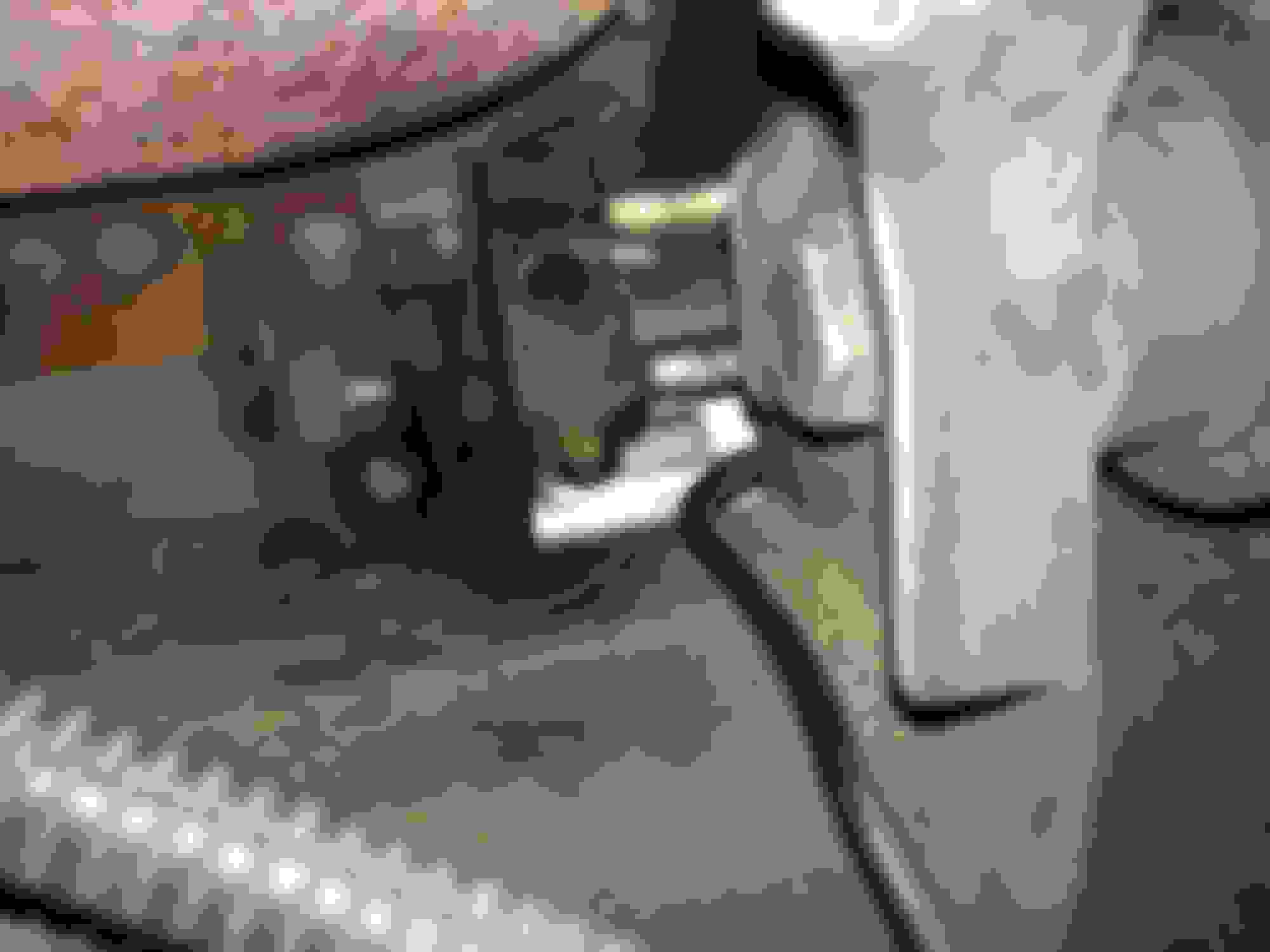
I noticed a leak around the compressor manifold lines on the "nut" off the bottom of the manifold connection. Is this a high pressure relief valve?
The high pressure line coming off of the manifold seems solid (i had this entire assembly replaced 5-6 years ago due to the hose there).
yes to the compressor.
I am thinking of the expansion valve, that valve separates the high side from the low side.
you may need to take this to a good a/c shop.
2003 F150 does not have an expansion valve that is a fact I would also assume that other years and models are the same