



07 F150 spark plug replacement questions


Global Moderator &
Senior Member
Senior Member

Joined: Aug 2005
Posts: 21,337
Likes: 159
From: DFW
There simply isn't enough space for the 1/2" impact on the back half of the engine
I'm really surprised the 1/4 Makita could handle the task
I'm looking at picking a 12v 3/8th Makita for the house
http://www.toolbarn.com/makita-wt01zw.html
I'm really surprised the 1/4 Makita could handle the task
I'm looking at picking a 12v 3/8th Makita for the house
http://www.toolbarn.com/makita-wt01zw.html

Thread Starter
|
Senior Member
Joined: Apr 2007
Posts: 800
Likes: 0
From: Minnesota
Yeah, it showed it had enough power so I kept with it, otherwise I would have switched to the pnuematic. I bought the drill/impact combo with 2 lithium batterys and a charger/carrying case for $200 at home depot. Best $200 ive spent.
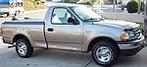
Also I should note that Im all done! Got the new 515 plugs and accel super coils in last night. Didnt drive it yet but started it up and let in run for a while and it sounded/idled great. I then turned her off after she warmed up a bit and changed the oil/filter as I did add a little kroil to cylindres #5 and #8.
Also I should note that Im all done! Got the new 515 plugs and accel super coils in last night. Didnt drive it yet but started it up and let in run for a while and it sounded/idled great. I then turned her off after she warmed up a bit and changed the oil/filter as I did add a little kroil to cylindres #5 and #8.


Thread Starter
|
Senior Member
Joined: Apr 2007
Posts: 800
Likes: 0
From: Minnesota
Thanks
I got a smoking deal on them so I figrued why not. Read the reviews on Amazon and Summit or wherevere, Average raiting is like 4.6 out of 5. Not bad when most reviews are from people that had an issue with a product.
I got a smoking deal on them so I figrued why not. Read the reviews on Amazon and Summit or wherevere, Average raiting is like 4.6 out of 5. Not bad when most reviews are from people that had an issue with a product.
Last edited by mgp32; Apr 10, 2015 at 02:54 PM.


Senior Member
Joined: Dec 2012
Posts: 567
Likes: 0
From: New Jersey
A few friends and I used accels coils on our Harley's and always had problem with them going bad. On a Harley with a bad coil you get stuck on the road. Not a problem with 6 or 8 coils! If they start to go bad, replace them all. Just my 2 cents.

Senior Member


Joined: Mar 2014
Posts: 151
Likes: 5
From: Bealeton, VA
You could go to an electric motor rebuilder and see if they'll either give or sell you some carbon tetrachloromethane. But if you're able to score any, please, please, please wear the proper protective gear (rubber or vinyl gloves, face mask (at the very least), respirator preferably, and a face shield), because carbon tet is a very very very dangerous substance, can cause cancer, birth defects, etc.
The vapor by itself will cause you to pass out if you breathe it too long in a closed room
Carbon tetrachloride
Hazard Summary-Created in April 1992; Revised in January 2000
Carbon tetrachloride may be found in both ambient outdoor and indoor air. The primary effects of carbon tetrachloride in humans are on the liver, kidneys, and central nervous system (CNS). Human symptoms of acute (short-term) inhalation and oral exposures to carbon tetrachloride include headache, weakness, lethargy, nausea, and vomiting. Acute exposures to higher levels and chronic (long-term) inhalation or oral exposure to carbon tetrachloride produces liver and kidney damage in humans. Human data on the carcinogenic effects of carbon tetrachloride are limited. Studies in animals have shown that ingestion of carbon tetrachloride increases the risk of liver cancer. EPA has classified carbon tetrachloride as a Group B2, probable human carcinogen.
Please Note: The main sources of information for this fact sheet are EPA's Integrated Risk Information System (IRIS), which contains information on oral chronic toxicity of carbon tetrachloride and the RfD, and the carcinogenic effects of carbon tetrachloride including the unit cancer risk for inhalation exposure, and the Agency for Toxic Substances and Disease Registry's (ATSDR's) Toxicological Profile for Carbon tetrachloride.
Uses:
Carbon tetrachloride was produced in large quantities to make refrigerants and propellants for aerosol cans, as a solvent for oils, fats, lacquers, varnishes, rubber waxes, and resins, and as a grain fumigant and a dry cleaning agent. Consumer and fumigant uses have been discontinued and only industrial uses remain.
Sources and Potential Exposure
Individuals may be exposed to carbon tetrachloride in the air from accidental releases from production and uses, and from its disposal in landfills where it may evaporate into the air or leach into groundwater. Carbon tetrachloride is also a common contaminant of indoor air; the sources of exposure appear to be building materials or products, such as cleaning agents, used in the home.
Workers directly involved in the manufacture or use of carbon tetrachloride are most likely to have significant exposures to carbon tetrachloride.
Individuals may also be exposed to carbon tetrachloride by drinking contaminated water.
Assessing Personal Exposure:
Measurement of carbon tetrachloride in exhaled breath has been the most convenient method for determining exposure; measurements in blood, fat, or other tissues have also been used as indicators of exposure. However, these tests are not routinely available and cannot be used to predict whether any health effects will result.
Health Hazard Information
Acute Effects:
Acute inhalation and oral exposures to high levels of carbon tetrachloride have been observed primarily to damage the liver (swollen, tender liver, changes in enzyme levels, and jaundice) and kidneys (nephritis, nephrosis, proteinurea) of humans. Depression of the central nervous system has also been reported. Symptoms of acute exposure in humans include headache, weakness, lethargy, nausea, and vomiting.
Delayed pulmonary edema (fluid in lungs) has been observed in humans exposed to high levels of carbon tetrachloride by inhalation and ingestion, but this is believed to be due to injury to the kidney rather than direct action of carbon tetrachloride on the lung.
Acute animal exposure tests in rats, mice, rabbits, and guinea pigs have demonstrated carbon tetrachloride to have low toxicity from inhalation exposure, low-to-moderate toxicity from ingestion, and moderate toxicity from dermal exposure.
Chronic Effects (Noncancer):
Chronic inhalation or oral exposure to carbon tetrachloride produces liver and kidney damage in humans and animals.
EPA has not established a Reference Concentration (RfC) for carbon tetrachloride.
The California Environmental Protection Agency (CalEPA) has established a chronic reference exposure level of 0.04 milligrams per cubic meter (mg/m3) for carbon tetrachloride based on liver effects in guinea pigs. The CalEPA reference exposure level is a concentration at or below which adverse health effects are not likely to occur. It is not a direct estimator of risk, but rather a reference point to gauge the potential effects. At lifetime exposures increasingly greater than the reference exposure level, the potential for adverse health effects increases.
ATSDR has established an acute duration (1-14 days) inhalation minimal risk level (MRL) of 1.3 mg/m3 (0.2 parts per million [ppm]) based on liver effects in rats, and an intermediate duration (14-365 days) MRL of 0.3 mg/m3 (0.05 ppm) also based on liver effects in rats. The MRL is an estimate of the daily human exposure to a hazardous substance that is likely to be without appreciable risk of adverse noncancer health effects over a specified duration of exposure.
The Reference Dose (RfD) for carbon tetrachloride is 0.0007 milligrams per kilogram per day (mg/kg/d) based on the occurrence of liver lesions in rats. The RfD is an estimate (with uncertainty spanning perhaps an order of magnitude) of a daily oral exposure to the human population (including sensitive subgroups) that is likely to be without appreciable risk of deleterious noncancer effects during a lifetime.
EPA has medium confidence in the RfD based on (1) high confidence in the principal study on which the RfD was based because the study was well conducted and good dose-response was observed in the liver, which is the target organ for carbon tetrachloride toxicity; and (2) medium confidence in the database because four additional subchronic studies support the RfD, but reproductive and teratology endpoints are not well investigated; and, consequently, medium confidence in the RfD.
Reproductive/Developmental Effects:
No information is available on the reproductive effects of carbon tetrachloride in humans. Limited epidemiological data have indicated a possible association between certain birth outcomes (e.g., birth weight, cleft palate) and drinking water exposure. However, as the water contained multiple chemicals, the role of carbon tetrachloride is unclear.
Decreased fertility and degenerative changes in the testes have been observed in animals exposed to carbon tetrachloride by inhalation.
Birth defects have not been observed in animals exposed to carbon tetrachloride by inhalation or ingestion.
Cancer Risk:
Occasional reports have noted the occurrence of liver cancer in workers who had been exposed to carbon tetrachloride by inhalation exposure; however, the data are not sufficient to establish a cause-and-effect relationship.
Liver tumors have developed in rats and mice exposed to carbon tetrachloride by gavage (experimentally placing the chemical in their stomachs).
EPA has classified carbon tetrachloride as a Group B2, probable human carcinogen.
EPA uses mathematical models, based on human and animal studies, to estimate the probability of a person developing cancer from continuously breathing air containing a specified concentration of a chemical. EPA calculated an inhalation unit risk of 1.5 × 10⁻⁵ (µg/m3)-1. EPA estimates that, if an individual were to continuously breathe air containing carbon tetrachloride at an average of 0.07 µg/m3
(7 x 10⁻⁵ mg/m3) over his or her entire lifetime, that person would theoretically have no more than a one-in-a-million increased chance of developing cancer as a direct result of breathing air containing this chemical. Similarly, EPA estimates that continuously breathing air containing 0.7 µg/m3 (7 x 10⁻⁴ mg/m3) would result in not greater than a one-in-a-hundred thousand increased chance of developing cancer, and air containing 7.0 µg/m3 (7 x 10⁻³ mg/m3) would result in not greater than a one-in-a-ten thousand increased chance of developing cancer.
EPA has calculated an oral cancer slope factor of 1.3 x 10⁻¹ (mg/kg/d)-1. For a detailed discussion of confidence in the potency estimates, please see IRIS.
Physical Properties:
The chemical formula for carbon tetrachloride is CCl4, and its molecular weight is 153.8 g/mol.
Carbon tetrachloride is a clear, nonflammable liquid which is almost insoluble in water.
Carbon tetrachloride has a sweet characteristic odor, with an odor threshold above 10 ppm.
The vapor pressure for carbon tetrachloride is 91.3 mm Hg at 20 C, and its log octanol/water partition coefficient (log Kow) is 2.64.
So take this information, use it well, and DO NOT be careless with Carbon Tet!!!
The vapor by itself will cause you to pass out if you breathe it too long in a closed room
Carbon tetrachloride
Hazard Summary-Created in April 1992; Revised in January 2000
Carbon tetrachloride may be found in both ambient outdoor and indoor air. The primary effects of carbon tetrachloride in humans are on the liver, kidneys, and central nervous system (CNS). Human symptoms of acute (short-term) inhalation and oral exposures to carbon tetrachloride include headache, weakness, lethargy, nausea, and vomiting. Acute exposures to higher levels and chronic (long-term) inhalation or oral exposure to carbon tetrachloride produces liver and kidney damage in humans. Human data on the carcinogenic effects of carbon tetrachloride are limited. Studies in animals have shown that ingestion of carbon tetrachloride increases the risk of liver cancer. EPA has classified carbon tetrachloride as a Group B2, probable human carcinogen.
Please Note: The main sources of information for this fact sheet are EPA's Integrated Risk Information System (IRIS), which contains information on oral chronic toxicity of carbon tetrachloride and the RfD, and the carcinogenic effects of carbon tetrachloride including the unit cancer risk for inhalation exposure, and the Agency for Toxic Substances and Disease Registry's (ATSDR's) Toxicological Profile for Carbon tetrachloride.
Uses:
Carbon tetrachloride was produced in large quantities to make refrigerants and propellants for aerosol cans, as a solvent for oils, fats, lacquers, varnishes, rubber waxes, and resins, and as a grain fumigant and a dry cleaning agent. Consumer and fumigant uses have been discontinued and only industrial uses remain.
Sources and Potential Exposure
Individuals may be exposed to carbon tetrachloride in the air from accidental releases from production and uses, and from its disposal in landfills where it may evaporate into the air or leach into groundwater. Carbon tetrachloride is also a common contaminant of indoor air; the sources of exposure appear to be building materials or products, such as cleaning agents, used in the home.
Workers directly involved in the manufacture or use of carbon tetrachloride are most likely to have significant exposures to carbon tetrachloride.
Individuals may also be exposed to carbon tetrachloride by drinking contaminated water.
Assessing Personal Exposure:
Measurement of carbon tetrachloride in exhaled breath has been the most convenient method for determining exposure; measurements in blood, fat, or other tissues have also been used as indicators of exposure. However, these tests are not routinely available and cannot be used to predict whether any health effects will result.
Health Hazard Information
Acute Effects:
Acute inhalation and oral exposures to high levels of carbon tetrachloride have been observed primarily to damage the liver (swollen, tender liver, changes in enzyme levels, and jaundice) and kidneys (nephritis, nephrosis, proteinurea) of humans. Depression of the central nervous system has also been reported. Symptoms of acute exposure in humans include headache, weakness, lethargy, nausea, and vomiting.
Delayed pulmonary edema (fluid in lungs) has been observed in humans exposed to high levels of carbon tetrachloride by inhalation and ingestion, but this is believed to be due to injury to the kidney rather than direct action of carbon tetrachloride on the lung.
Acute animal exposure tests in rats, mice, rabbits, and guinea pigs have demonstrated carbon tetrachloride to have low toxicity from inhalation exposure, low-to-moderate toxicity from ingestion, and moderate toxicity from dermal exposure.
Chronic Effects (Noncancer):
Chronic inhalation or oral exposure to carbon tetrachloride produces liver and kidney damage in humans and animals.
EPA has not established a Reference Concentration (RfC) for carbon tetrachloride.
The California Environmental Protection Agency (CalEPA) has established a chronic reference exposure level of 0.04 milligrams per cubic meter (mg/m3) for carbon tetrachloride based on liver effects in guinea pigs. The CalEPA reference exposure level is a concentration at or below which adverse health effects are not likely to occur. It is not a direct estimator of risk, but rather a reference point to gauge the potential effects. At lifetime exposures increasingly greater than the reference exposure level, the potential for adverse health effects increases.
ATSDR has established an acute duration (1-14 days) inhalation minimal risk level (MRL) of 1.3 mg/m3 (0.2 parts per million [ppm]) based on liver effects in rats, and an intermediate duration (14-365 days) MRL of 0.3 mg/m3 (0.05 ppm) also based on liver effects in rats. The MRL is an estimate of the daily human exposure to a hazardous substance that is likely to be without appreciable risk of adverse noncancer health effects over a specified duration of exposure.
The Reference Dose (RfD) for carbon tetrachloride is 0.0007 milligrams per kilogram per day (mg/kg/d) based on the occurrence of liver lesions in rats. The RfD is an estimate (with uncertainty spanning perhaps an order of magnitude) of a daily oral exposure to the human population (including sensitive subgroups) that is likely to be without appreciable risk of deleterious noncancer effects during a lifetime.
EPA has medium confidence in the RfD based on (1) high confidence in the principal study on which the RfD was based because the study was well conducted and good dose-response was observed in the liver, which is the target organ for carbon tetrachloride toxicity; and (2) medium confidence in the database because four additional subchronic studies support the RfD, but reproductive and teratology endpoints are not well investigated; and, consequently, medium confidence in the RfD.
Reproductive/Developmental Effects:
No information is available on the reproductive effects of carbon tetrachloride in humans. Limited epidemiological data have indicated a possible association between certain birth outcomes (e.g., birth weight, cleft palate) and drinking water exposure. However, as the water contained multiple chemicals, the role of carbon tetrachloride is unclear.
Decreased fertility and degenerative changes in the testes have been observed in animals exposed to carbon tetrachloride by inhalation.
Birth defects have not been observed in animals exposed to carbon tetrachloride by inhalation or ingestion.
Cancer Risk:
Occasional reports have noted the occurrence of liver cancer in workers who had been exposed to carbon tetrachloride by inhalation exposure; however, the data are not sufficient to establish a cause-and-effect relationship.
Liver tumors have developed in rats and mice exposed to carbon tetrachloride by gavage (experimentally placing the chemical in their stomachs).
EPA has classified carbon tetrachloride as a Group B2, probable human carcinogen.
EPA uses mathematical models, based on human and animal studies, to estimate the probability of a person developing cancer from continuously breathing air containing a specified concentration of a chemical. EPA calculated an inhalation unit risk of 1.5 × 10⁻⁵ (µg/m3)-1. EPA estimates that, if an individual were to continuously breathe air containing carbon tetrachloride at an average of 0.07 µg/m3
(7 x 10⁻⁵ mg/m3) over his or her entire lifetime, that person would theoretically have no more than a one-in-a-million increased chance of developing cancer as a direct result of breathing air containing this chemical. Similarly, EPA estimates that continuously breathing air containing 0.7 µg/m3 (7 x 10⁻⁴ mg/m3) would result in not greater than a one-in-a-hundred thousand increased chance of developing cancer, and air containing 7.0 µg/m3 (7 x 10⁻³ mg/m3) would result in not greater than a one-in-a-ten thousand increased chance of developing cancer.
EPA has calculated an oral cancer slope factor of 1.3 x 10⁻¹ (mg/kg/d)-1. For a detailed discussion of confidence in the potency estimates, please see IRIS.
Physical Properties:
The chemical formula for carbon tetrachloride is CCl4, and its molecular weight is 153.8 g/mol.
Carbon tetrachloride is a clear, nonflammable liquid which is almost insoluble in water.
Carbon tetrachloride has a sweet characteristic odor, with an odor threshold above 10 ppm.
The vapor pressure for carbon tetrachloride is 91.3 mm Hg at 20 C, and its log octanol/water partition coefficient (log Kow) is 2.64.
So take this information, use it well, and DO NOT be careless with Carbon Tet!!!
Last edited by FX-4 Man; Apr 11, 2015 at 11:14 PM.
Senior Member
Joined: Mar 2014
Posts: 151
Likes: 5
From: Bealeton, VA
Not really a problem though, I went to a local AutoZone and the manager there traded my incorrect coils for the right ones - straight exchange, since mine were new and in a box (tried Advanced Auto first, they were MOST uncooperative), so from now on, AutoZone is my A/P store!!!


