


PO171 trouble code


Technical Article Contributor
Joined: Oct 2005
Posts: 25,641
Likes: 19
From: MI
Originally Posted by BB4xl
-Jbrew you helped untill I fixed it! Your advise was so valuable,to be able to ask qustions and get help made it happen.If you where closer I would come over with a case of jbrews for you! Thanks again to everyone!!

Also, personal experiences help.- Like the one you just had.
Glad it worked out and you were able to save some cash..

BTW- If you came over with a case - we would have to drink them


Junior Member
Joined: Apr 2008
Posts: 3
Likes: 0
From: Louisiana
I have what I think is an 2002 F-150 with a 4.2 V6 the mfg date is 12-01 but the owner's manual is for an 02. I am gettin the 0171 & 0174 codes too. I've cleaned the MAF, Sprayed with brake fluid looking for vacum leaks, found none. After reading on this and several other sites, there is supposedly a pcv valve on the passenger valve cover. Not on this truck, just a hose with a plastic elbow. I've also heard there is a rubber elbow that connects to the upper & lower intake that is famous for getting a hole in it, but I have not been able to locate it. Any ideas where this mystry elbow is located?
The truck is running great at all speeds.
The truck is running great at all speeds.

Junior Member
Joined: Apr 2008
Posts: 19
Likes: 0
From: Western Kentucky
I have what I think is an 2002 F-150 with a 4.2 V6 the mfg date is 12-01 but the owner's manual is for an 02. I am gettin the 0171 & 0174 codes too. I've cleaned the MAF, Sprayed with brake fluid looking for vacum leaks, found none. After reading on this and several other sites, there is supposedly a pcv valve on the passenger valve cover. Not on this truck, just a hose with a plastic elbow. I've also heard there is a rubber elbow that connects to the upper & lower intake that is famous for getting a hole in it, but I have not been able to locate it. Any ideas where this mystry elbow is located?
The truck is running great at all speeds.
The truck is running great at all speeds.
Hi, the 4.2 was notorious for the intake seals to leak between the upper and lower intake, it also has isolator bolts that have rubber seals around them. just something to look into, i have changed many of them for a 171 and 174. Hope this helps

Senior Member
Joined: Mar 2008
Posts: 835
Likes: 2
From: Central New York
My 2 Suggestions
So I am running lean right now. Not because I have a code, but because I have crappy gas mileage. Are there affordable diagnostic scanners on the market that will read trim codes, etc.? I mean, if it is going to cost $150 for a scan to throw parts at it, and $200 for a scanner that I can reuse, I'd rather buy the scanner and learn how to work it. 
I too was plagued by these same codes (0171/0174) but was able to correct them with a few checks and minor repairs.
To answer your question about scanners. I will be purchasing one as well. Thankfully I have a friend who has a full Snap-On unit, but I don't want to keep taking up his time and unit when I run into problems.
Anyway, I found that the EQUUS-3130 or the Actron CP9180 is the best tool for the money. Search Google for the best prices. I found that I can get either unit for around $165.00. I havn't bought one yet because my codes are clear. I am the so called Family mechanic and perform alot of repairs for parts only and enjoy the work "PART-TIME" but I am realizing that I have to get a scanner to be more of a help. When you check into these two units, let me know what you think the better tool is, they are very similar.
Anyone else that has any input on the scanner matter, please advice !!!!
PS: Actron is USA built with good support, I called them and the answered all my questions properly. So I am leaning towards Actron BASED on that alone. They both have free internet upgrades and live data output.
TJK
Senior Member


Joined: Dec 2006
Posts: 43,542
Likes: 819
From: Joplin MO
The 4.2 gasket issues were pretty much taken care of with engines built after 1/98.
Technical Article Contributor
Joined: Oct 2005
Posts: 25,641
Likes: 19
From: MI
So were the seals - even in the transmissions . All seals were updated. Internal seals were updated to handle synthetics in 98. There use to be a leaching problem when synthetic lubricants were used. Synthetics today are tame compared to back then. Which explains why these vehicles can go so long without a leak anywhere. Reusable gaskets will outlast any vehicle as long as there not physically damaged via carelessness.
Last edited by jbrew; Apr 16, 2008 at 03:32 PM.

Junior Member
Joined: Mar 2008
Posts: 2
Likes: 0
From: huffman
4.2l v6 po171 &po174-VACCUM LEAK (SUCKING AIR)
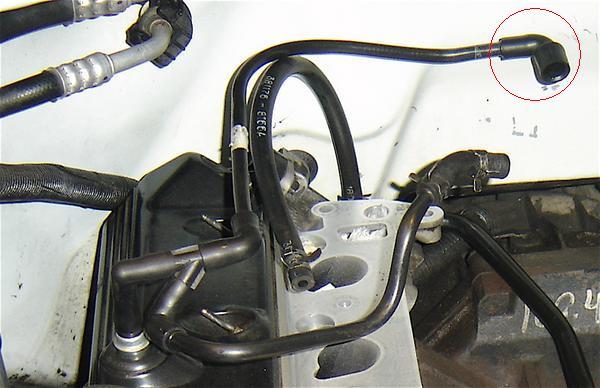
The codes given are po171 and po174 and notorius little 3/8 to 1/2 inch elbow that dry rots is under the front of the plenum. Cost about $4.20 to fix at your local auto parts. I'm sure there are other leaky hoses that need replacing soon after this pesky elbow. It took me less than thirty minutes to troubleshoot. Don't rely on spraying for vaccum leaks it doesn't always work. Use the senses GOD gave you, Use your ears and eyes. Listen for leaks and move vaccum lines see if you hear hissing get louder. I'm not a certified tech i'm just an elevator mechanic who happens to work on my own stuff and my family's and the neighbors and my cousins and my cousin's neighbors, you get the point. Don't be scared and don't just start buying parts and throwing them at your vehicle.

Junior Member
Joined: Jul 2005
Posts: 7
Likes: 0
My '97 Expy with 5.4, 98,000miles threw a 171-174 code. Another one for the pcv rubber elbow. Decided to get the entire pcv, hard plastic line, rubber elbow and a throttle body gasket while I was at Ford parts. $34 but hey, the throttle doesnt stick coming off idle now with a good cleaning and the check engine light is gone. Even without pulling codes, I knew it was a vac. leak, had the idle shake.
Last edited by 94-Lightning; Jul 21, 2008 at 02:58 PM. Reason: spelling

Junior Member
Joined: Aug 2008
Posts: 1
Likes: 0
From: pa
Joe
Thank for the great advise. I was to auto zone and they wanted to sell me a $100 sensor. I replaced my fuel filter. I still had the engine lope and the stalling on idle. I found a vacuum leak on the pvc hose on the elbow where it returns to the rear on the throttle body. It was hard to find and I could not hear it. I put my finger on it and the idle changed immediately.You were 100% correct with your 95% sure it was a vacuum leak. Thanks for saving me time and money. Joe
People always miss the real meaning of the codes. What the computer is saying is that the injector pulsewidth has reached the upper limit, for a particular volume of air... which means it has reached the limit of the ammount of fuel it is "supposed" to add for a given ammount of air, and the O2's are still reporting lean.
So the computer is saying to you.. Hey, I've added all the fuel I think is necessairy, and this piece is STILL running lean!!! So, I'm having to add MORE fuel than I am supposed to to maintain stoich.
It can happen as a result of using a high alcohol content fuel, or an intermittent missfire, or a vacuum leak, or a faulty O2 sensor, or an exhaust leak, a weak coil pack, bad spark plug/wires (or several bad plugs), or a stuck open or stuck closed injector, or low pressure on the injector rail. Or it could be mechanical, but that's not likely.
Explanation of my opinions:
Alcohol-- Fuels high in alcohol require more fuel per volume of air to maintain stoich. So, a high alcohol fuel would require that your computer add more fuel than normal for the particular volume of air, resulting in a lean code.
Missfires-- When you have a missfire, your engine doesn't burn the fuel for that cylinder. So logically this would give you a rich code right? WRONG. Your O2 sensors don't see fuel, they see air. And they see all the unburned air in the exhaust stream, so that would give you a LEAN code.
Vacuum leaks-- Your computer delivers fuel to the engine based on the quantity of air it's breathing in (based on the MAF sensor) It verifys (and fine tunes) this with the O2 sensors... When you have a vacuum leak,(meaning-air that is introduced AFTER the MAF sensor) the computers fuel calculations come out wrong. (the O2 sensors read lean) So in an effort to fix the problem, it adds more fuel. This may fix the symptom, and in the case of a lean code, it usually does. But the computer is only allotted a certian level of "adjustability" before it has to report a problem. And in your case, the computer has reached the upper limit of the "fuel allotment". Hence the lean code. This doesn't mean that your engine is actually running lean. In fact, it could be running perfectly stoich. What it means is, that the computer realizes that it is having to add too much fuel to maintain stoich, so something is wrong.
That's why the code is so vague. The computer is just reporting an observation. Not a part failure.
I would lean toward a vacuum leak FIRST. 2nd choice would be a missfire related to spark plugs/wires. 3rd choice would be an exhaust leak. 4th choice would be missfire related to coil.
The other reasons are very unlikely if you ask me, but they are possible. But the reason they are ulikely, is that you would have more codes if they were the cause...
I'm almost 95% on a vacuum leak. Check the pcv hose where it enters the intake manifold. Betcha it's rotten right there. If not, spray starting fluid around the intake manifold/vacuum hoses and see if the engine changes sounds... It will help you locate vacuum leaks BUT BE CAREFUL. If you have a shorted out spark plug wire and you spray starting fluid on it, it will burn.
How long have you had your spark plugs/wires? If they have close to 200,000 miles on them, then they might be the culprit. If not, then they are probably not the cause. Crank your engine tonight and pop the hood, Look carefully at all the spark plug wires and see if any of them are arcing to your engine block. Night time is an easy way to find a skinned or otherwise flawed spark plug wire.
Have you recently washed your engine? If so, then it could be a shorted coil pack, or shorted spark plug wires. Remove all of them and dry them off.
I hope this helps...
So the computer is saying to you.. Hey, I've added all the fuel I think is necessairy, and this piece is STILL running lean!!! So, I'm having to add MORE fuel than I am supposed to to maintain stoich.
It can happen as a result of using a high alcohol content fuel, or an intermittent missfire, or a vacuum leak, or a faulty O2 sensor, or an exhaust leak, a weak coil pack, bad spark plug/wires (or several bad plugs), or a stuck open or stuck closed injector, or low pressure on the injector rail. Or it could be mechanical, but that's not likely.
Explanation of my opinions:
Alcohol-- Fuels high in alcohol require more fuel per volume of air to maintain stoich. So, a high alcohol fuel would require that your computer add more fuel than normal for the particular volume of air, resulting in a lean code.
Missfires-- When you have a missfire, your engine doesn't burn the fuel for that cylinder. So logically this would give you a rich code right? WRONG. Your O2 sensors don't see fuel, they see air. And they see all the unburned air in the exhaust stream, so that would give you a LEAN code.
Vacuum leaks-- Your computer delivers fuel to the engine based on the quantity of air it's breathing in (based on the MAF sensor) It verifys (and fine tunes) this with the O2 sensors... When you have a vacuum leak,(meaning-air that is introduced AFTER the MAF sensor) the computers fuel calculations come out wrong. (the O2 sensors read lean) So in an effort to fix the problem, it adds more fuel. This may fix the symptom, and in the case of a lean code, it usually does. But the computer is only allotted a certian level of "adjustability" before it has to report a problem. And in your case, the computer has reached the upper limit of the "fuel allotment". Hence the lean code. This doesn't mean that your engine is actually running lean. In fact, it could be running perfectly stoich. What it means is, that the computer realizes that it is having to add too much fuel to maintain stoich, so something is wrong.
That's why the code is so vague. The computer is just reporting an observation. Not a part failure.
I would lean toward a vacuum leak FIRST. 2nd choice would be a missfire related to spark plugs/wires. 3rd choice would be an exhaust leak. 4th choice would be missfire related to coil.
The other reasons are very unlikely if you ask me, but they are possible. But the reason they are ulikely, is that you would have more codes if they were the cause...
I'm almost 95% on a vacuum leak. Check the pcv hose where it enters the intake manifold. Betcha it's rotten right there. If not, spray starting fluid around the intake manifold/vacuum hoses and see if the engine changes sounds... It will help you locate vacuum leaks BUT BE CAREFUL. If you have a shorted out spark plug wire and you spray starting fluid on it, it will burn.
How long have you had your spark plugs/wires? If they have close to 200,000 miles on them, then they might be the culprit. If not, then they are probably not the cause. Crank your engine tonight and pop the hood, Look carefully at all the spark plug wires and see if any of them are arcing to your engine block. Night time is an easy way to find a skinned or otherwise flawed spark plug wire.
Have you recently washed your engine? If so, then it could be a shorted coil pack, or shorted spark plug wires. Remove all of them and dry them off.
I hope this helps...

Junior Member
Joined: Mar 2009
Posts: 7
Likes: 0
My service engine light came on last week ('00 F-150 6 cyl.). I also went to AutoZone, they pulled the codes that said that all the O2 sensors were bad. WTF? How do 4 sensors go bad all at once? I replaced the fuel filter, reset the computer and no codes. Since I'm the 2nd owner of the truck, I have no idea how old the filter was - might have been original for all I know. Knew I should have replaced that when I got the truck...
I like cheap fixes.
I like this forum, lots of competing ideas, and a lot of common sense.
I like cheap fixes.
I like this forum, lots of competing ideas, and a lot of common sense.
Technical Article Contributor
Joined: Oct 2005
Posts: 25,641
Likes: 19
From: MI
My service engine light came on last week ('00 F-150 6 cyl.). I also went to AutoZone, they pulled the codes that said that all the O2 sensors were bad. WTF? How do 4 sensors go bad all at once? I replaced the fuel filter, reset the computer and no codes. Since I'm the 2nd owner of the truck, I have no idea how old the filter was - might have been original for all I know. Knew I should have replaced that when I got the truck...
I like cheap fixes.
I like this forum, lots of competing ideas, and a lot of common sense.
I like cheap fixes.
I like this forum, lots of competing ideas, and a lot of common sense.
I can tell you right now we can save you allot of money and wasted time, but you need to go back and write down the codes from the scanner. Or better yet, purchase your own scanner - Sears has them on sale this week for $68.
This is the one on sale -
http://picasaweb.google.com/jbrew393...69944717625362
Junior Member
Joined: Mar 2009
Posts: 7
Likes: 0
I agree. The codes that were posted at the beginning of this thread is what I got. But all 4 sensors at once? Highly unlikely. I'm going to get a scanner ASAP. BTW, is there a crude way to see the codes, like the key on, engine off method on some models? I couldn't find a way to trick it into blinking the service engine light giving the codes. Just curious. I'm still buying the scanner though.
This truck has been a great running truck so far. It's had a few mechanical issues, but what can you expect for 9 years old? I'm glad I said bye bye to anything G.M.
This truck has been a great running truck so far. It's had a few mechanical issues, but what can you expect for 9 years old? I'm glad I said bye bye to anything G.M.
Technical Article Contributor
Joined: Oct 2005
Posts: 25,641
Likes: 19
From: MI
I agree. The codes that were posted at the beginning of this thread is what I got. But all 4 sensors at once? Highly unlikely. I'm going to get a scanner ASAP. BTW, is there a crude way to see the codes, like the key on, engine off method on some models? I couldn't find a way to trick it into blinking the service engine light giving the codes. Just curious. I'm still buying the scanner though.
This truck has been a great running truck so far. It's had a few mechanical issues, but what can you expect for 9 years old? I'm glad I said bye bye to anything G.M.
This truck has been a great running truck so far. It's had a few mechanical issues, but what can you expect for 9 years old? I'm glad I said bye bye to anything G.M.
Or a dirty MAF sensor.
Junior Member
Joined: Mar 2009
Posts: 7
Likes: 0
Excellent. Thanks for the heads up! I'm driving about 40 miles tonight, we'll see if that light pops back on. I already noticed a difference in the way it idles. It was kicking up to about 1700 RPM, now it is back where it should be. Doing the filter and unloading load of firewood, I should see a lil increase in mileage to boot...
I did do a quick eyeball on the vacuum lines, they all seem good. Tight and not brittle. I'm sure I will discover some I missed thanks to this forum.
I did do a quick eyeball on the vacuum lines, they all seem good. Tight and not brittle. I'm sure I will discover some I missed thanks to this forum.