


Arrrgghhh !


Senior Member
Joined: May 2005
Posts: 270
Likes: 0
From: Vancouver
when i was in Chile several years ago they had wall mounted propane (cylnder) water heaters. Worked well enough for a low/moderate volume shower, good for dishes. That one was a good one as it was self lightining
when the water was turned on. No eletrical hook up required. I expected that unless they came in larger models it would only be good for the cabin.
the the mineral build up would it be simular to pipe build up?- for volume as it constricts, aditional build up would be slower... Am i mistaken...
russell
when the water was turned on. No eletrical hook up required. I expected that unless they came in larger models it would only be good for the cabin.
the the mineral build up would it be simular to pipe build up?- for volume as it constricts, aditional build up would be slower... Am i mistaken...
russell

Senior Member
Joined: Apr 2001
Posts: 918
Likes: 0
From: south western NYS Latitude: 42.34 N, Longitude: 78.46 W
 I hope this helps
I have a tankless propane heater and its great. Its only my wife and i so we don't use to much but have all we could want. the space savings is great we have a shelf unit ewhere the old tank was. I like it and i have hard water (spring water) and have not had any problems in the 5 years its been in. I installed it myself and it was simple to do. Below is some info on them.
In a hot water storage tank heater, energy is required to heat the water in the storage tank and to keep it hot. In both storage and tankless heaters, the basic efficiencies of initially heating the water are very similar; in fact, the energy consumptions are very similar at this point. This is because the amount of energy required to heat a fixed amount of water is determined by a simple formula as follows ...
Flow rate of water in any units (eg gallons per minute) x a constant called specific heat x the number of degrees the water must be heated by .... interpreting this in simple terms it means if you double the flow and want to keep the temperature the same you must double the energy supplied be it in the form of electricity or gas or any other energy type
However here is where the difference in overall energy efficiency is .... a feature of tankless water heaters is that no energy is consumed in overcoming the standby losses or conventional heat losses commonly encountered in a storage water heater tank. To reduce these losses tank storage water heaters should always be well insulated ... insulation does not prevent the heat loss completely but reduces the rate of energy or heat loss dramatically. One and a half inches of foam insulation is good normally.
Important questions for the energy conscious consumer are "How much energy is lost during standby?" and, of course the really important question "How much are the hot water storage tank energy standby losses going to cost me?" The ability to compare cost and energy savings between the alternative tankless and hot water storage tank systems or features is important.
Here is a brief summary and comparison of the features between the 2 systems and each point is covered in some detail in this web site ....
Hot Water System feature variables Tankless hot water system features Storage tank hot water system features
Energy cost Lower cost ... reduced energy losses Higher losses ... higher energy usage
Unit size Much smaller than hot water storage tank Large compared to tankless hot water heater
Installation cost Small compared to storage tank heater in new structures but higher in retrofit More complex to install in new structures
Installation space Compact unit .. saves space taken up by storage tank hot water heater which can be used as closet for example Bulky heater and tank system with difficult access normally
Capacity When large quantities are required simultaneously flow can reduce or temperature of water is reduced Normally depending on size of tank capacity is higher for simultaneous use
On other pages of this site I will go into detail on how you compare actual cost savings between tankless hot water heaters and hot water tank storage systems. In general expect to see ongoing energy savings from tankless hot water system but this may not be as big as you might think or as advertisers would want you to believe.
To be able to make these feature comparisons meaningful and to understand this site better it is important to define a few terms
Energy Factor ... every hot water heater tankless or storage tank heater must be provided with a certified Energy Factor. This factor in simple terms means that if the Energy Factor is high then the annual cost of power to run the tanklless hot water heater or the storage heater will be lower than it would be for a low rated Energy Factor. Gas tankless water heaters Energy Factors typically range from 0.64 to 0.82
First Hour Rating ... this number refers to the amount of hot water the heater can supply per hour ... if a storage tank system is in use the assumption is that the tank is full of hot water at the start of the first hour.
Heating Energy ... the energy required just to heat the hot water
In a hot water storage tank heater, energy is required to heat the water in the storage tank and to keep it hot. In both storage and tankless heaters, the basic efficiencies of initially heating the water are very similar; in fact, the energy consumptions are very similar at this point. This is because the amount of energy required to heat a fixed amount of water is determined by a simple formula as follows ...
Flow rate of water in any units (eg gallons per minute) x a constant called specific heat x the number of degrees the water must be heated by .... interpreting this in simple terms it means if you double the flow and want to keep the temperature the same you must double the energy supplied be it in the form of electricity or gas or any other energy type
However here is where the difference in overall energy efficiency is .... a feature of tankless water heaters is that no energy is consumed in overcoming the standby losses or conventional heat losses commonly encountered in a storage water heater tank. To reduce these losses tank storage water heaters should always be well insulated ... insulation does not prevent the heat loss completely but reduces the rate of energy or heat loss dramatically. One and a half inches of foam insulation is good normally.
Important questions for the energy conscious consumer are "How much energy is lost during standby?" and, of course the really important question "How much are the hot water storage tank energy standby losses going to cost me?" The ability to compare cost and energy savings between the alternative tankless and hot water storage tank systems or features is important.
Here is a brief summary and comparison of the features between the 2 systems and each point is covered in some detail in this web site ....
Hot Water System feature variables Tankless hot water system features Storage tank hot water system features
Energy cost Lower cost ... reduced energy losses Higher losses ... higher energy usage
Unit size Much smaller than hot water storage tank Large compared to tankless hot water heater
Installation cost Small compared to storage tank heater in new structures but higher in retrofit More complex to install in new structures
Installation space Compact unit .. saves space taken up by storage tank hot water heater which can be used as closet for example Bulky heater and tank system with difficult access normally
Capacity When large quantities are required simultaneously flow can reduce or temperature of water is reduced Normally depending on size of tank capacity is higher for simultaneous use
On other pages of this site I will go into detail on how you compare actual cost savings between tankless hot water heaters and hot water tank storage systems. In general expect to see ongoing energy savings from tankless hot water system but this may not be as big as you might think or as advertisers would want you to believe.
To be able to make these feature comparisons meaningful and to understand this site better it is important to define a few terms
Energy Factor ... every hot water heater tankless or storage tank heater must be provided with a certified Energy Factor. This factor in simple terms means that if the Energy Factor is high then the annual cost of power to run the tanklless hot water heater or the storage heater will be lower than it would be for a low rated Energy Factor. Gas tankless water heaters Energy Factors typically range from 0.64 to 0.82
First Hour Rating ... this number refers to the amount of hot water the heater can supply per hour ... if a storage tank system is in use the assumption is that the tank is full of hot water at the start of the first hour.
Heating Energy ... the energy required just to heat the hot water
Senior Member
Joined: Apr 2001
Posts: 918
Likes: 0
From: south western NYS Latitude: 42.34 N, Longitude: 78.46 W
more info
Standby Energy ... the energy that will be lost based upon a tank full of hot water just standing there unused and in this state it will lose some heat depending upon how well insulated the system's storage tank is. The water will thus cool down and more energy will then be required to bring the temperature back to that required. The average U.S. home will use a 40 gallons gas fired hot water storage heater. Refer to the GAMA (Gas Appliance Manufacturers Association) guide. These hot water heaters will have Energy Factors ranging from 0.54 to 0.64.
Average Gas Energy Cost ... it is assumed that national US average fuel cost of 0.6 $/therm will be used.
Electricity Energy Cost ... it is assumed that average national cost is $0.06 per kiloWatt Hour
Hot Water usage rate ... this can vary a great deal based upon number in family and time of day. The correct heater should be designed on basis of maximum hot water heating load. In other words what amount of hot water is required at busiest time of day.
More on tankless hot water heaters and their features
Water heating accounts for 20% or more of an average household's annual energy expenditures. The yearly operating costs for conventional gas or electric storage tank water heaters in the USA average $200 or $450, respectively.
One way to reduce this expenditure is to use an on demand, also called tankless, instant or instantaneous hot water heater. On demand water heaters are common in Japan and Europe. They began appearing in the United States about 25 years ago.
Unlike "conventional" storage tank water heaters, a feature of tankless water heaters heat water only as it is used, or on demand which means as soon as the tap is opened the heater starts up. To be able to heat the water quickly on demand the heat rating of these tankless heaters are very high.
Once activated, the heater delivers a constant supply of hot water in most cases unless too much hot water is demanded in which case the unit may reduce the temperature or flow rate or both ... remember the heater can onlt deliver a design amount of energy
They come in a variety of sizes for different applications, such as a whole-house water heater, a hot water source for a remote bathroom or hot tub, or as a boiler to provide hot water for a home heating system.
They can also be used as a booster for dishwashers, washing machines, and a solar or wood-fired domestic hot water system. You may install a demand water heater centrally or at the point of use, depending on the amount of hot water required. For example, you can use a small electric unit as a booster for a remote bathroom or laundry.
Using low-flow shower heads and water-conserving faucets are a good idea with demand water heaters. Demand water heaters cost more than conventional storage tank-type units.
The appeal of demand water heaters is not only the elimination of the tank standby losses and the resulting lower operating costs, but also the fact that the heater delivers hot water continuously.
Life Expectancy of tankless water heaters
Most tankless models have a life expectancy of more than 20 years. Storage tank water heaters last 10 to 15 years. Most tankless models have easily replaceable parts that can extend their life by many years more.
Average Gas Energy Cost ... it is assumed that national US average fuel cost of 0.6 $/therm will be used.
Electricity Energy Cost ... it is assumed that average national cost is $0.06 per kiloWatt Hour
Hot Water usage rate ... this can vary a great deal based upon number in family and time of day. The correct heater should be designed on basis of maximum hot water heating load. In other words what amount of hot water is required at busiest time of day.
More on tankless hot water heaters and their features
Water heating accounts for 20% or more of an average household's annual energy expenditures. The yearly operating costs for conventional gas or electric storage tank water heaters in the USA average $200 or $450, respectively.
One way to reduce this expenditure is to use an on demand, also called tankless, instant or instantaneous hot water heater. On demand water heaters are common in Japan and Europe. They began appearing in the United States about 25 years ago.
Unlike "conventional" storage tank water heaters, a feature of tankless water heaters heat water only as it is used, or on demand which means as soon as the tap is opened the heater starts up. To be able to heat the water quickly on demand the heat rating of these tankless heaters are very high.
Once activated, the heater delivers a constant supply of hot water in most cases unless too much hot water is demanded in which case the unit may reduce the temperature or flow rate or both ... remember the heater can onlt deliver a design amount of energy
They come in a variety of sizes for different applications, such as a whole-house water heater, a hot water source for a remote bathroom or hot tub, or as a boiler to provide hot water for a home heating system.
They can also be used as a booster for dishwashers, washing machines, and a solar or wood-fired domestic hot water system. You may install a demand water heater centrally or at the point of use, depending on the amount of hot water required. For example, you can use a small electric unit as a booster for a remote bathroom or laundry.
Using low-flow shower heads and water-conserving faucets are a good idea with demand water heaters. Demand water heaters cost more than conventional storage tank-type units.
The appeal of demand water heaters is not only the elimination of the tank standby losses and the resulting lower operating costs, but also the fact that the heater delivers hot water continuously.
Life Expectancy of tankless water heaters
Most tankless models have a life expectancy of more than 20 years. Storage tank water heaters last 10 to 15 years. Most tankless models have easily replaceable parts that can extend their life by many years more.

Senior Member
Joined: Jul 1999
Posts: 558
Likes: 0
From: The Netherlands
Originally Posted by arrbilly
they have been used in Europe for many years, so you might try F150europe or some of our other overseas members...
regards
regards
Badgeiser, we call that thing a geiser, bad for bathing.
A similar one like this one, is on one of the kitchenwalls.
It runs on propane producing warm water used for showering and in the kitchen.
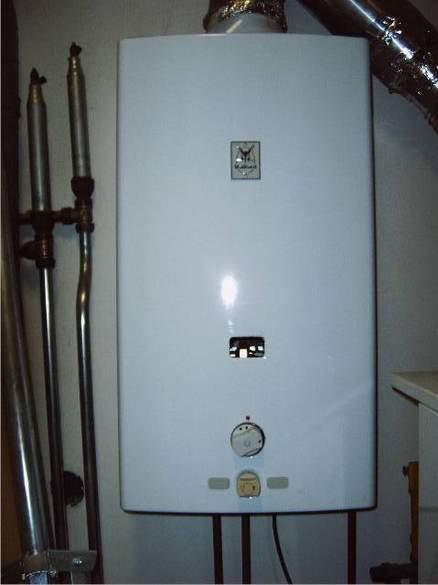
If I am not mistaken, Vaillant is the leading brand in Europe.
The geiser is at least +10 years old, not much maintenance.
Built up?, never heard of that and waterlines are about 40+ years old.
That's all I can say.

Junior Member
Joined: Jul 2007
Posts: 0
Likes: 0
tankless hot water heater
You should also check this one out, it explains the idea pretty much good!
http://hubpages.com/hub/Tankless_Hot_Water_Heater
http://hubpages.com/hub/Tankless_Hot_Water_Heater

Senior Member
Joined: Oct 2006
Posts: 182
Likes: 0
Originally Posted by zapster
my buddy marc has a tankless water heater in his house in new hampshire..used to have the old tank type...till it sprung a leak...and nobody went up there for a week...i found it pissing water everywhere in the basement...ran the well dry and almost burnt the pump up..one other thing to consider...if you dont need hot water (in this case) for 2or 3 weeks(because we only go up there to snowmobile every other week in the winter) it makes no sense to keep the water hot..that costs$$$$$...the new tankless heater works just fine and uses no elecricity untill you want hot water...zap!


Senior Member
Joined: Dec 2004
Posts: 891
Likes: 1
From: Lost some where in the middle of the Ozark Mountains!
Originally Posted by NetBob928
When I researched them they were about twice the price of a conventional water heater. But the one reason not to buy them is mineral buildup in the radiator-like heating pipes. Where I live we have fairly hard water so they aren't
practical unless one has a water softener unit as well.
practical unless one has a water softener unit as well.
I want one too but I am expecting about a $7K-$10K in parts.
iwill install a sediment filter to trap particles including rust and calcium carbonate, a second sediment filter with smaller pores, an activated carbon filter to trap organic chemicals, and chlorine which will attack and degrade TFC reverse osmosis membranes, then lastly a reverse osmosis (RO) filter which is a thin film composite membrane (TFM or TFC) then finally, last but not least the heater.
$10K to have constant supply of hot water...... kinda hard to justify, but I do want one.

