


fuel filter


 fuel filter

Technical Article Contributor
Joined: Oct 2003
Posts: 1,490
Likes: 0
From: Topeka Kansas
Re: fuel filter
Originally posted by tropical
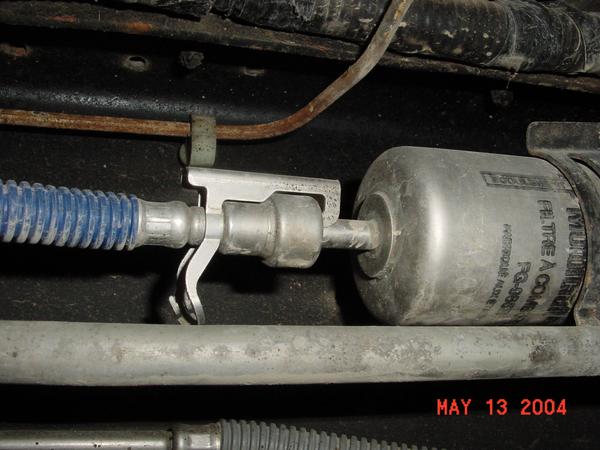
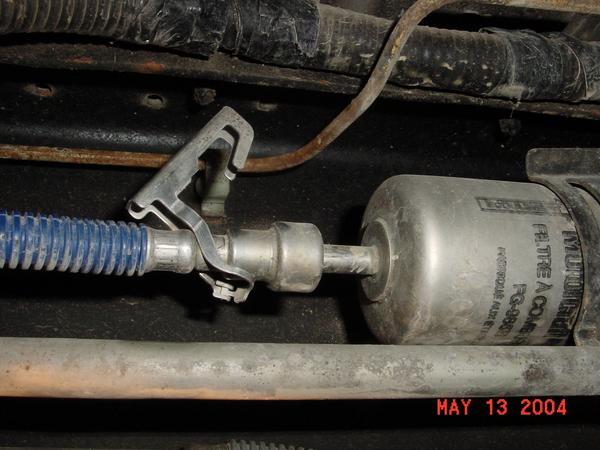
does anyone know how to remove the fuel filter off a 99 f150 with the metal clips on it
does anyone know how to remove the fuel filter off a 99 f150 with the metal clips on it
http://www.fordf150.net/howto/fuelfilter.php
The metal safety clips unhook.
Last edited by temp1; May 30, 2004 at 06:28 PM.


Member
Joined: Sep 2003
Posts: 41
Likes: 0
From: Pittsburgh
Yes, get the plastic one. I borrowed my neighbors metal one and it would not fit between the filter and connector. The plastic one was a little shorter and slid right in. Just rember to push the connector towards the filter to take the pressure off the pins then push the tool towards the connector to unlock the pins. The connector will then pull right off.

Senior Member
Joined: Jan 2003
Posts: 514
Likes: 0
From: Texas
You guys must have bought crappy metal ones, because mine is a snap to use.
I can't remember the name brand, but it was only 12.00 and has 2 sizes, one on each end. It has never taken more than 5 minutes total to replace my filter, and that includes clean up time.
I can't remember the name brand, but it was only 12.00 and has 2 sizes, one on each end. It has never taken more than 5 minutes total to replace my filter, and that includes clean up time.
Technical Article Contributor
Joined: Oct 2003
Posts: 1,490
Likes: 0
From: Topeka Kansas
Originally posted by rbraughn
You guys must have bought crappy metal ones, because mine is a snap to use.
I can't remember the name brand, but it was only 12.00 and has 2 sizes, one on each end. It has never taken more than 5 minutes total to replace my filter, and that includes clean up time.
You guys must have bought crappy metal ones, because mine is a snap to use.
I can't remember the name brand, but it was only 12.00 and has 2 sizes, one on each end. It has never taken more than 5 minutes total to replace my filter, and that includes clean up time.
Senior Member
Joined: Jan 2003
Posts: 514
Likes: 0
From: Texas
I never relieve the pressure, I just do the filter change first thing in the morning after it sits all night, and the pressure drops on its own I guess. It still leaks out of the filter and lines a bit, but its not pressurized.
Trending Topics
Member
Joined: Sep 2003
Posts: 41
Likes: 0
From: Pittsburgh
The pressure in the fuel line has nothing to do with it. I doubt there is any significant fuel line pressure once you shut off a vehicle. I just changed mine a couple weeks ago. I had a new filter in 5 minutes after I got the truck home from the part store and shut it off. The problem is not using the tool correctly. Most people will pull on the connector which puts their own physical pressure on the connection and wonder why the tool isn't disengaging the locking mechanism. Push the connector towards the filter then push the tool towards the connector. It will all just slide off. Fuel line pressure or not. If there was any pressure then I should have gotten one quick spurt of fuel the moment I disconnected the first connector. I only got a couple drops of fuel from the line.
Technical Article Contributor
Joined: Oct 2003
Posts: 1,490
Likes: 0
From: Topeka Kansas
Originally posted by pallyboy
The pressure in the fuel line has nothing to do with it. I doubt there is any significant fuel line pressure once you shut off a vehicle.
The pressure in the fuel line has nothing to do with it. I doubt there is any significant fuel line pressure once you shut off a vehicle.
 ).
).Are they called "Quick connectors"?

Senior Member
Joined: Mar 2001
Posts: 4,506
Likes: 6
From: Puyallup, WA
It's probably just some brainy engineers great idea that he came up with during the design of it all....... I don't know what the problem is with the good ol' rubber hose and hose clamp design that's been around since the dawn of time..... Worked well on all the other vehicles I've had....
And why does that damn clip that holds the filter in need to have so much tension on it!! That's the biggest PITA to deal with on the whole deal......
And why does that damn clip that holds the filter in need to have so much tension on it!! That's the biggest PITA to deal with on the whole deal......
Member
Joined: Sep 2003
Posts: 41
Likes: 0
From: Pittsburgh
They are actually not bad connectors and have been used for a long time in many other applications. Think of a door. If you pull on a door then turn the **** it won't turn. You would be putting pressure on the pin. But if you push it in the **** will turn.
I looked for a diagram but I couldn't find one right away.
I looked for a diagram but I couldn't find one right away.

Senior Member
Joined: Mar 2003
Posts: 175
Likes: 0
From: Mechanicsville, VA
Mitch
Good old hose clamps and and rubber hoses seem to have disapeared in the automotive industry. The combination of 60-80 psi fuel pressure and LAWYERS have killed them. Our old carbureted engines only had about 30psi feul pressure---if we were lucky, after all the only jobe the fuel pump had was to fill up the carburetor bowl. Now it haas to push the fuel through that tiny little orifice to cause the atomization of the fuel.
If one of Ford's Engineers put a hose clamp on one of these fuel systems, it would invariably blow off---possibly causing a spray of fuel onto the exhaust manifold. After the lawyers got throught with Ford, there may not be a "next" model year for us to LUST after.
These fittings can be a PITA, but from a product liability standpoint, they are a necessary evil.
I'll get off of the engineer's soap-box now,
Sidewinder
Good old hose clamps and and rubber hoses seem to have disapeared in the automotive industry. The combination of 60-80 psi fuel pressure and LAWYERS have killed them. Our old carbureted engines only had about 30psi feul pressure---if we were lucky, after all the only jobe the fuel pump had was to fill up the carburetor bowl. Now it haas to push the fuel through that tiny little orifice to cause the atomization of the fuel.
If one of Ford's Engineers put a hose clamp on one of these fuel systems, it would invariably blow off---possibly causing a spray of fuel onto the exhaust manifold. After the lawyers got throught with Ford, there may not be a "next" model year for us to LUST after.
These fittings can be a PITA, but from a product liability standpoint, they are a necessary evil.
I'll get off of the engineer's soap-box now,
Sidewinder
Senior Member
Joined: Mar 2003
Posts: 175
Likes: 0
From: Mechanicsville, VA
You know you're having a good day when you can spell "atomization, invariably, and carburetor", but can't seem to get "feul (fuel), jobe (job), or haas (has)" right.
 must slow down and proof read
Sorry for the poor read guys,
Grand-Daddy always told me to make sure my brain was in gear before I dumped the clutch on my lips---guess my foot slipped off the clutch during that post.
Sidewinder
must slow down and proof read Sorry for the poor read guys,
Grand-Daddy always told me to make sure my brain was in gear before I dumped the clutch on my lips---guess my foot slipped off the clutch during that post.
Sidewinder
Senior Member
Joined: Mar 2001
Posts: 4,506
Likes: 6
From: Puyallup, WA

You know you're having a good day when you can spell "atomization, invariably, and carburetor", but can't seem to get "feul (fuel), jobe (job), or haas (has)" right.
 ha, ha....
That's a good point about the pressure however..... Forgot all about that!
But, my 1986 5.0 GT was injected and had the in tank pump and the standard hose clamp filter setup.... Owned it for over 12 years without issue......
Oh well, I guess times do change and the new system is really simple, when you have the correct tools and know how it works.... It still takes me longer to get the damn filter out of "Jaws" then it does to disconnect the lines!!
Member
Joined: Sep 2003
Posts: 41
Likes: 0
From: Pittsburgh
Sidewinder
You're not kidding about the pressure and what would happen if you used a basic hose and clamp. I had a Jeep Wrangler and the plastic part of the line they used going up to the engine cracked. It was a fountain of fuel 3 feet high. Before I pulled over realizing what happened I smelt the gas and could see the huge gas trail all down the road in my mirror. Fortunately it didn't cause a fire.
You're not kidding about the pressure and what would happen if you used a basic hose and clamp. I had a Jeep Wrangler and the plastic part of the line they used going up to the engine cracked. It was a fountain of fuel 3 feet high. Before I pulled over realizing what happened I smelt the gas and could see the huge gas trail all down the road in my mirror. Fortunately it didn't cause a fire.