


How do I cap off the front axle vacuum motor


Thread Starter
|
Junior Member
Joined: Aug 2007
Posts: 13
Likes: 0
From: Maryland
How do I cap off the front axle vacuum motor
Hello All,
This is my first post on this site. I have an 1998 F150 that I want to tow four wheels down. The manual states that i need to cap off one side of the front axle vacuum motor. Can someone tell me how to do this? I would also like to know why. The manual also states that the max speed is 55MPH. I was told that ford only put that in for legal reasons and going over 55MPH will not hurt the truck. Can anybody give me info or opinions on this? I normaly drive at 65MPH
Thanks for the help
Les
This is my first post on this site. I have an 1998 F150 that I want to tow four wheels down. The manual states that i need to cap off one side of the front axle vacuum motor. Can someone tell me how to do this? I would also like to know why. The manual also states that the max speed is 55MPH. I was told that ford only put that in for legal reasons and going over 55MPH will not hurt the truck. Can anybody give me info or opinions on this? I normaly drive at 65MPH
Thanks for the help
Les
Thread Starter
|
Junior Member
Joined: Aug 2007
Posts: 13
Likes: 0
From: Maryland
Capping off front axle
Thanks Zaairman,
I'm not sure what you mean by disconnect rear driveshaft. The manual tells me to just put the transfer case in neutral. Do i need to cap off vacuum line after I unplug it?
Les
I'm not sure what you mean by disconnect rear driveshaft. The manual tells me to just put the transfer case in neutral. Do i need to cap off vacuum line after I unplug it?
Les
Thread Starter
|
Junior Member
Joined: Aug 2007
Posts: 13
Likes: 0
From: Maryland
Vacuum line disconnect
Thank you Zaairman,
I do have the manual transfer case. I'm clear on the shifting it into neutral. I'm still not clear on should I plug the vacuum line after I disconnect it or just leave it unpluged? It looks like two lines going to the motor/axle so how do I know which one to unplug? It's almost dark here so i could be wrong on the two lines. Is there a way I can comfirm that the front axle is in the position it needs to be for towing?
Zaairman, I know I'm asking a lot of questions & I thank you again for you help
Les
I do have the manual transfer case. I'm clear on the shifting it into neutral. I'm still not clear on should I plug the vacuum line after I disconnect it or just leave it unpluged? It looks like two lines going to the motor/axle so how do I know which one to unplug? It's almost dark here so i could be wrong on the two lines. Is there a way I can comfirm that the front axle is in the position it needs to be for towing?
Zaairman, I know I'm asking a lot of questions & I thank you again for you help
Les

Senior Member
Joined: Mar 2005
Posts: 5,843
Likes: 0
From: St. Charles, MO
Yes, there is one line going to each hub, but if its like my Superduty then there is a T connection in between the vacuum pump and the hubs. I'd just unhook the line straight from the vacuum pump.
Thread Starter
|
Junior Member
Joined: Aug 2007
Posts: 13
Likes: 0
From: Maryland
Trending Topics

Senior Member
Joined: Jul 2007
Posts: 186
Likes: 0
From: NC
Originally Posted by Zaairman
Yes, there is one line going to each hub, but if its like my Superduty then there is a T connection in between the vacuum pump and the hubs. I'd just unhook the line straight from the vacuum pump.
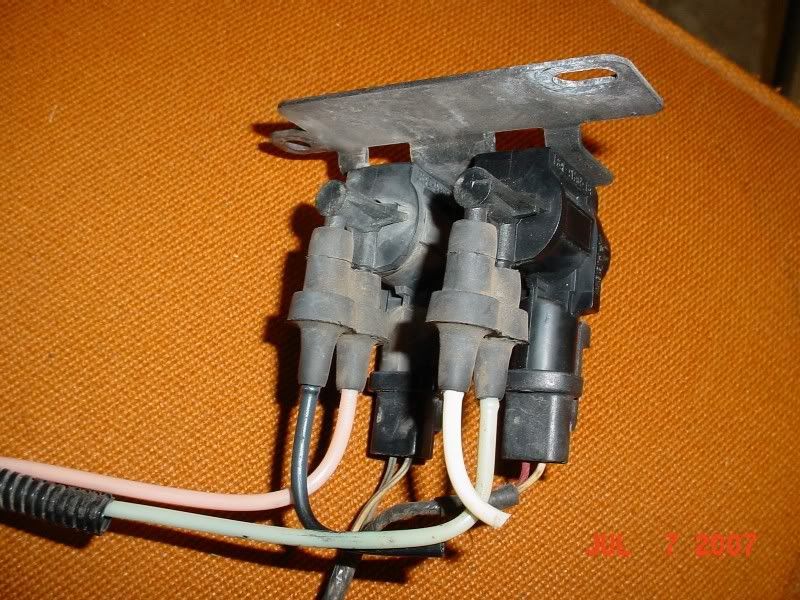
BOTTOM VIEW
Senior Member
Joined: Mar 2005
Posts: 5,843
Likes: 0
From: St. Charles, MO
Originally Posted by Carolina Five-0
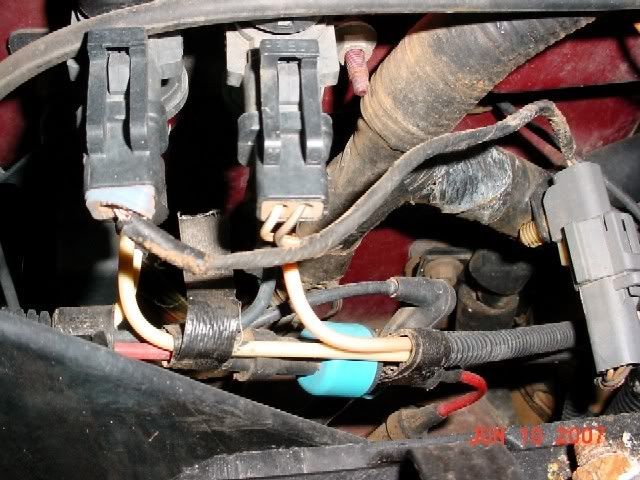
His is gas, so no vacuum pump. The easiest place to disconnect them would be on the firewall @ the solenoids.
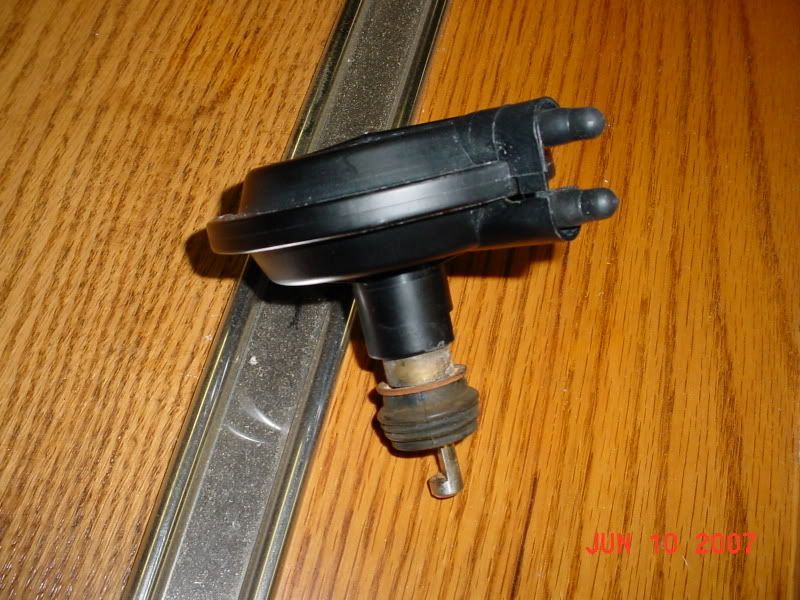
 He said vacuum motor, so I just assumed that since I've got it, well, :o Thanks.
Senior Member
Joined: Jul 2007
Posts: 186
Likes: 0
From: NC
The lines that are cut off are the vacuum supply lines. Mine are all faded out but there is a pink and a blue line. The pink disengages the diff lock and the blue engages it. I guess I would plug the pink one or both to have everything covered.
I see the towing instructions in the manual but I can't figure out why they would want the vacuum lines plugged.
I see the towing instructions in the manual but I can't figure out why they would want the vacuum lines plugged.
Thread Starter
|
Junior Member
Joined: Aug 2007
Posts: 13
Likes: 0
From: Maryland
Does anyone know this Why plug the vacuum lines?????
I asked the question are several sites as to why the Vacuum lines need to be pluged and no one has had an awnser. I will go ahead and plug the line , but I sure would like to know why it has to be done in the first place.
Senior Member
Joined: Mar 2005
Posts: 5,843
Likes: 0
From: St. Charles, MO
Originally Posted by Lwalston
I asked the question are several sites as to why the Vacuum lines need to be pluged and no one has had an awnser. I will go ahead and plug the line , but I sure would like to know why it has to be done in the first place.