


Autometer vs DakotaDigital gauges?


Thread Starter
|
Senior Member
Joined: Jun 2002
Posts: 787
Likes: 0
From: Los Angeles, CA
 Autometer vs DakotaDigital gauges?
I have identified what type of gauges I would like to install in my truck (as of now they are: boost/vacuum, fuel pressure, oil pressure, water temperature, air intake temperature, and air/fuel ratio).
Only thing I did not do is decide which manufacturer I should go with. Everyone praises Autometer (at least everyone I have spoken with so far), so it is naturally my first choice, but I am tempted with what I am seeing at DakotaDigital. My thoughts about both of these brands are:
Autometer pros: They seem having reputation for good quality (reliability and precision)
Autometer cons: High price and I have problem quickly finding out what is the value on needle based instruments under certain light conditions which often distracts me from conditions around me
DakotaDigital pros: I can quickly and precisely read out values under many conditions, plus they are half of the price of Autometer
DakotaDigital cons: I don't know how reliable and precise they are
Therefore if you have experience with DakotaDigital gauges I would appreciate your input. Their pros are tempting but if they don't have at least very close, if not same or better, reliability and precision as Autometer ones do I will not go with them no matter what.
Thank you in advance!
ZoranC
Only thing I did not do is decide which manufacturer I should go with. Everyone praises Autometer (at least everyone I have spoken with so far), so it is naturally my first choice, but I am tempted with what I am seeing at DakotaDigital. My thoughts about both of these brands are:
Autometer pros: They seem having reputation for good quality (reliability and precision)
Autometer cons: High price and I have problem quickly finding out what is the value on needle based instruments under certain light conditions which often distracts me from conditions around me
DakotaDigital pros: I can quickly and precisely read out values under many conditions, plus they are half of the price of Autometer
DakotaDigital cons: I don't know how reliable and precise they are
Therefore if you have experience with DakotaDigital gauges I would appreciate your input. Their pros are tempting but if they don't have at least very close, if not same or better, reliability and precision as Autometer ones do I will not go with them no matter what.
Thank you in advance!
ZoranC

Senior Member
Joined: Jun 2002
Posts: 4,293
Likes: 6
Autometer cons: High price and I have problem quickly finding out what is the value on needle based instruments under certain light conditions which often distracts me from conditions around me

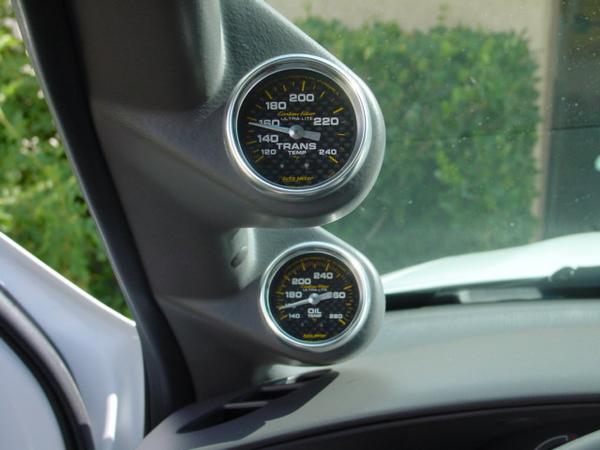
Sorry, couldn't resist. Anyways, can't go wrong with Autometer. Personally, I don't like the look of digital gauges, but that's just my opinion. IF you look around, I have yet to see digital gauges in too many race cars, or airplanes. At least the ones I've been around. If you want performance and reliability, you want the mechanical needles. If you like reading the digital gauges, then go for it. All come's down to personal preference but, why do you think Autometer doesn't make any digital gauges???

Junior Member
Joined: Jan 2003
Posts: 6
Likes: 0
From: NC
Most race teams use analog gauges for two reasons. First, for most parameters, the analog is more of a direct transfer of information from the sensing point to the gauge, thus a more reliable system (digital has to be converted at the sensing point to digital and reconverted at the readout. The second, and just as important, is that they can orient the gauges so that the needles of all the gauges, at optimum operating conditions, are pointing in the same direction. All the driver has to do is a quick glance, and if all the needles are pointing up then all is ok, if one is pointing left or right then he can check that one for how far out of range it is. Believe me, as an ex-driver (60's sports cars), I can tell you how important it is to be able to check the gauges between turns and not have to read each gauge individually as you would have to do with digitals or if the analogs were not all oriented in the same direction.
gator39
gator39
Thread Starter
|
Senior Member
Joined: Jun 2002
Posts: 787
Likes: 0
From: Los Angeles, CA
Originally posted by Galaxy Are these gauges going in a truck or a space ship??

Originally posted by Galaxy IF you look around, I have yet to see digital gauges in too many race cars, or airplanes.
Originally posted by Galaxy If you want performance and reliability, you want the mechanical needles.
I was kinda having digital multimeters and other instruments in mind with analog ones being practically nonexistant these days because digital ones surpassed them. So what I was indirectly asking is does Dakota Digital have any problems that would make them of lesser value than Autometer, and do senders used by Dakota Digital have same speed of response, resolution, and quality as ones used by Autometer.
Originally posted by Galaxy why do you think Autometer doesn't make any digital gauges???
Thank you!
ZoranC
Thread Starter
|
Senior Member
Joined: Jun 2002
Posts: 787
Likes: 0
From: Los Angeles, CA
Originally posted by gator39 for most parameters, the analog is more of a direct transfer of information from the sensing point to the gauge, thus a more reliable system (digital has to be converted at the sensing point to digital and reconverted at the readout
Correct?
ZoranC

Senior Member
Joined: Jan 2002
Posts: 531
Likes: 0
From: Lakewood, CA
any gages that are installed in cars are unreliable for exact readings. can't get around this w/o paying a whole lot more than you would want to and those gages wouldn't fit in the dash anyway. gages in vehicles are for trending and you don't really need the numbers on them much less have them read exactly what the true numbers are. if for example your temp gage reads 190 degrees F during normal driving and say 195 during towing up hills and you then notice it goes up to 210 or 220 well then you know something is amis in your cooling system and that you should pull over and shut her down and figure it out. digital gages make you take your eyes off the road in order to read them and analog you just glance at the needle when driving hence the comment from the former racer. just my comments, do what you like but just know that if digital gages were needed nascar, porsche and ferrari would have gone to them long ago.
Trending Topics
Senior Member
Joined: Jun 2002
Posts: 4,293
Likes: 6
Anything with an electrical sender is NOT going to be more precise than a mechanical, direct reading, analog gauge. While I stand to be criticized for not having the exact numbers readily available, Autometer will even give you the statistics on the "percentage of inaccuracy" between their mechanical gauges and electrical gauges, with the electrical ones having a higher percentage of innacuracy. Now I will admit we have taken this down to splitting frog hair's, but the point still remains. No electrical unit, wether it's digital or not, is going to be more accurate than the mechanical. Sorry.
No they don't. Take a temp gauge for example. It is basicly a thermostat. The temperature reading is direct and instantaneous from the temp bulb submerged in what ever fluid you are measuring to the face of the gauge, with nothing to influence the reading, like protons and electrons and stuff. Just like sticking a thermometer in your mouth. You wouldn't take your temp with a thermometer and then say "well, it's mechanical so it's prbably off 3-5 degrees" would you? Same difference.
Also, don't LCDs update much faster than motors can?
Thread Starter
|
Senior Member
Joined: Jun 2002
Posts: 787
Likes: 0
From: Los Angeles, CA
Originally posted by gator39 Its probably a 50/50 split. For instance, in the case of oil pressure, you need a mechanical sensor for the pressure, which then has to be converted to a digital electrical signal.
ZoranC
Thread Starter
|
Senior Member
Joined: Jun 2002
Posts: 787
Likes: 0
From: Los Angeles, CA
Originally posted by pkagel any gages that are installed in cars are unreliable for exact readings
Originally posted by pkagel gages in vehicles are for trending and you don't really need the numbers on them much less have them read exactly what the true numbers are
Originally posted by pkagel if digital gages were needed nascar, porsche and ferrari would have gone to them long ago.
Thanks!
ZoranC
Thread Starter
|
Senior Member
Joined: Jun 2002
Posts: 787
Likes: 0
From: Los Angeles, CA
Originally posted by Galaxy Anything with an electrical sender is NOT going to be more precise than a mechanical, direct reading, analog gauge.
Originally posted by Galaxy Autometer will even give you the statistics on the "percentage of inaccuracy" between their mechanical gauges and electrical gauges, with the electrical ones having a higher percentage of innacuracy.
Originally posted by Galaxy No they don't. Take a temp gauge for example. It is basicly a thermostat.
ZoranC
Senior Member
Joined: Jan 2002
Posts: 531
Likes: 0
From: Lakewood, CA
as a group they may be more or less accurate but you are not worried about them as a group, you are worried about them as individual gages that you buy. so, the only way to determine this is to use precision test equipment, buy both gages and send back the ones that are not as accurate. like i said earlier, it really doesn't matter how accurate they are, they are just for trending, you don't even need numbers on them, you just need to know where the pointer is pointing at normal operating temp/press. if you want to know the exact temp buy an omega unit with thermistor and put it where you want the temp measured. that brings up another point, where do you want to measure temp, every place on the engine will have a different temp and where you measure it depends on what system/area you want to measure. basically, it sounds like you just want a look and that is fine, go for it, get the digital gages if you like them but never depend on them to be the exact readings of what is going on in your engine.
Thread Starter
|
Senior Member
Joined: Jun 2002
Posts: 787
Likes: 0
From: Los Angeles, CA
Originally posted by pkagel as a group they may be more or less accurate but you are not worried about them as a group, you are worried about them as individual gages that you buy
Originally posted by pkagel the only way to determine this is to use precision test equipment, buy both gages and send back the ones that are not as accurate
Originally posted by pkagel if you want to know the exact temp buy an omega unit with thermistor and put it where you want the temp measured. that brings up another point, where do you want to measure temp ...
... but never depend on them to be the exact readings of what is going on in your engine
... but never depend on them to be the exact readings of what is going on in your engine
ZoranC
Last edited by ZoranC; Jan 21, 2003 at 01:15 PM.
Thread Starter
|
Senior Member
Joined: Jun 2002
Posts: 787
Likes: 0
From: Los Angeles, CA
Originally posted by Galaxy Autometer will even give you the statistics on the "percentage of inaccuracy" between their mechanical gauges and electrical gauges, with the electrical ones having a higher percentage of innacuracy.[/B]
ZoranC
Last edited by ZoranC; Jan 21, 2003 at 01:35 PM.