


Recent George Will Column On Gas Prices


Thread Starter
|
Senior Member
Joined: Jun 2004
Posts: 2,823
Likes: 15
From: Houston, TX
Recent George Will Column On Gas Prices
While it has become fashionable to demonize the oil companies of late, I thought George Will's most recent column on the issue really put things in perspective.
According to his column, the oil companies make about 13-cents of profit on every gallon of gasoline sold at today's prices. The government, however, makes SUBSTANTIALLY more on every gallon of gas sold via Federal and State gasoline taxes.
Yet every politician in Washington is falling all over themselves to get in front of a camera and pontificate about the "greedy" oil companies and how they are pulling unreasonable profit out of the current gas situation! Yet if you propose cutting the gasoline tax (a much larger portion of the cost compared to oil company profits) they'll virtually go into convulsions saying we can't afford it!
As usual, phonies, demogagues, or worse -- every last one of them!
According to his column, the oil companies make about 13-cents of profit on every gallon of gasoline sold at today's prices. The government, however, makes SUBSTANTIALLY more on every gallon of gas sold via Federal and State gasoline taxes.
Yet every politician in Washington is falling all over themselves to get in front of a camera and pontificate about the "greedy" oil companies and how they are pulling unreasonable profit out of the current gas situation! Yet if you propose cutting the gasoline tax (a much larger portion of the cost compared to oil company profits) they'll virtually go into convulsions saying we can't afford it!
As usual, phonies, demogagues, or worse -- every last one of them!


Senior Member
Joined: Jan 2003
Posts: 2,079
Likes: 0
From: Pikesville, MD
Originally Posted by CrAz3D
...
Why isn't gasoline regulated like a regular utility (phone, water, electricity)? Beats me, I think that's on the way pretty soon. And I'm about 95% sure most people would support that.
Why isn't gasoline regulated like a regular utility (phone, water, electricity)? Beats me, I think that's on the way pretty soon. And I'm about 95% sure most people would support that.

Senior Member
Joined: Apr 2004
Posts: 4,424
Likes: 0
From: Motor City
Originally Posted by CrAz3D
uhm, lower-than-last-year oil prices accompanying record PROFIT (not income) = oil companies are screwing us from behind over and over again.
More refineries need to be built. Why aren't they being built? The companies claim it's because the requirements set by the feds are too strict. Maybe they are strict, but isn't that good? Safety should be a number 1 priority.
But why also might they not build more refineries?
-Building new facilities costs bucks.
-Demand is up, but because there are not enough refineries supply is down.
-Demand up and supply down = higher cost to us = higher profit to them.
Why isn't gasoline regulated like a regular utility (phone, water, electricity)? Beats me, I think that's on the way pretty soon. And I'm about 95% sure most people would support that.
More refineries need to be built. Why aren't they being built? The companies claim it's because the requirements set by the feds are too strict. Maybe they are strict, but isn't that good? Safety should be a number 1 priority.
But why also might they not build more refineries?
-Building new facilities costs bucks.
-Demand is up, but because there are not enough refineries supply is down.
-Demand up and supply down = higher cost to us = higher profit to them.
Why isn't gasoline regulated like a regular utility (phone, water, electricity)? Beats me, I think that's on the way pretty soon. And I'm about 95% sure most people would support that.
Nobody is gouging. The feds are already watching the industry. http://www.ftc.gov/ftc/oilgas/index.html
http://www.ftc.gov/opa/2006/05/katrinagasprices.shtm
Why don't oil refineries work harder to produce more gasoline?
The United States has nearly 150 refineries owned by 54 companies operating in 33 states. These facilities have produced nearly 350 million gallons of gasoline a day so far this year in order to meet consumer demand. But there are limits to how much gasoline these refineries can produce, based on the type of crude oil the refinery is using and its processing equipment. In general, gasoline makes up about 45 percent of the total output.
To some extent, refineries can shift the mix of products they make to emphasize the production of gasoline over other fuels, such as diesel or heating oil. In the fall, after gasoline demand has peaked, refiners increase production of heating oil in preparation for winter demand. In the spring, the emphasis shifts to building inventories of gasoline for the upcoming driving season.
The larger, long-term problem is that the United States refining capacity to manufacture gasoline is not keeping pace with demand. Until recently, low profit margins on gasoline – along with major environmental restraints and Not-In-My-Backyard sentiments – have discouraged construction of new refineries.
No new grassroots refinery has been constructed in the U.S. since 1976. All additional capacity has been the result of expanding or improving the efficiencies of existing facilities. However, as the economics of refining have improved over the last two years, companies have announced plans to significantly boost their U.S. refining capacity. For example, ConocoPhillips recently announced plans to expand capacity and increase capabilities at nine of its 12 U.S. refineries, which will boost the company’s capacity to make fuels such as gasoline, diesel and heating oil by 15 percent – the equivalent output of a new world-scale refinery.
Primarily because United States refining capacity hasn't grown as rapidly as gasoline demand, the shortfall has been made up with increased gasoline imports from Caribbean, Canadian and European refineries. Imported gasoline now accounts for about one out of every 10 gallons of gasoline sold in the United States. In the last 10 years, gasoline imports have risen by more than 60 percent.
The United States has nearly 150 refineries owned by 54 companies operating in 33 states. These facilities have produced nearly 350 million gallons of gasoline a day so far this year in order to meet consumer demand. But there are limits to how much gasoline these refineries can produce, based on the type of crude oil the refinery is using and its processing equipment. In general, gasoline makes up about 45 percent of the total output.
To some extent, refineries can shift the mix of products they make to emphasize the production of gasoline over other fuels, such as diesel or heating oil. In the fall, after gasoline demand has peaked, refiners increase production of heating oil in preparation for winter demand. In the spring, the emphasis shifts to building inventories of gasoline for the upcoming driving season.
The larger, long-term problem is that the United States refining capacity to manufacture gasoline is not keeping pace with demand. Until recently, low profit margins on gasoline – along with major environmental restraints and Not-In-My-Backyard sentiments – have discouraged construction of new refineries.
No new grassroots refinery has been constructed in the U.S. since 1976. All additional capacity has been the result of expanding or improving the efficiencies of existing facilities. However, as the economics of refining have improved over the last two years, companies have announced plans to significantly boost their U.S. refining capacity. For example, ConocoPhillips recently announced plans to expand capacity and increase capabilities at nine of its 12 U.S. refineries, which will boost the company’s capacity to make fuels such as gasoline, diesel and heating oil by 15 percent – the equivalent output of a new world-scale refinery.
Primarily because United States refining capacity hasn't grown as rapidly as gasoline demand, the shortfall has been made up with increased gasoline imports from Caribbean, Canadian and European refineries. Imported gasoline now accounts for about one out of every 10 gallons of gasoline sold in the United States. In the last 10 years, gasoline imports have risen by more than 60 percent.
Gas prices....

Senior Member
Joined: Apr 2004
Posts: 4,424
Likes: 0
From: Motor City
Originally Posted by vader716
Yes cause price controls work so well.
Shouldn't the government regulate oil profits?
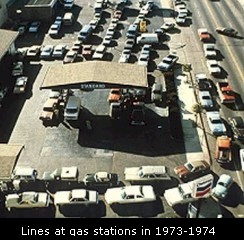
History serves as a helpful teacher on this question. As part of a general effort to combat high inflation in the early 1970s, President Nixon placed price controls on the oil industry and many other sectors of the American economy. Eventually the controls were lifted from other industries, but they remained in place for U.S.-produced oil as the government tried to partially protect consumers from the jump in world oil prices caused by the oil embargo of 1973-74. A so-called windfall profits tax was imposed on the industry in 1980, when again world oil prices rose dramatically as a result of supply disruptions stemming from conflicts in Iran and Iraq. The government began phasing out the tax in 1981.
Although various price and profit control programs did limit income to oil companies, it's questionable whether they benefited consumers in the long run. Between 1974 and 1980, imported oil prices averaged about 50 percent more than the price for oil produced in America. As a consequence, U.S. oil companies were discouraged from exploring for and finding supplies of oil and natural gas at home. Meanwhile, industrial and individual consumers were shielded from higher prices that might have encouraged greater energy conservation.
A report by the U.S. Energy Information Administration (EIA) that surveyed the events in the 25 years following the 1973-74 oil embargo concluded that federal price controls and allocations systems not only "failed to resolve these problems (electricity brownouts and rapidly rising prices), they seemed to aggravate them."
According to a 1990 Report of the Congressional Research Service, the windfall profits tax that was signed into law in 1980 and repealed in 1988 drained $79 billion in industry revenues during the 1980s that could have been used to invest in new oil production – leading to 1.6 billion fewer barrels of oil being produced in the U.S. from 1980-1988. The tax reduced domestic oil production as much as 6 percent, and increased oil imports as much as 16 percent.
History serves as a helpful teacher on this question. As part of a general effort to combat high inflation in the early 1970s, President Nixon placed price controls on the oil industry and many other sectors of the American economy. Eventually the controls were lifted from other industries, but they remained in place for U.S.-produced oil as the government tried to partially protect consumers from the jump in world oil prices caused by the oil embargo of 1973-74. A so-called windfall profits tax was imposed on the industry in 1980, when again world oil prices rose dramatically as a result of supply disruptions stemming from conflicts in Iran and Iraq. The government began phasing out the tax in 1981.
Although various price and profit control programs did limit income to oil companies, it's questionable whether they benefited consumers in the long run. Between 1974 and 1980, imported oil prices averaged about 50 percent more than the price for oil produced in America. As a consequence, U.S. oil companies were discouraged from exploring for and finding supplies of oil and natural gas at home. Meanwhile, industrial and individual consumers were shielded from higher prices that might have encouraged greater energy conservation.
A report by the U.S. Energy Information Administration (EIA) that surveyed the events in the 25 years following the 1973-74 oil embargo concluded that federal price controls and allocations systems not only "failed to resolve these problems (electricity brownouts and rapidly rising prices), they seemed to aggravate them."
According to a 1990 Report of the Congressional Research Service, the windfall profits tax that was signed into law in 1980 and repealed in 1988 drained $79 billion in industry revenues during the 1980s that could have been used to invest in new oil production – leading to 1.6 billion fewer barrels of oil being produced in the U.S. from 1980-1988. The tax reduced domestic oil production as much as 6 percent, and increased oil imports as much as 16 percent.
Thread Starter
|
Senior Member
Joined: Jun 2004
Posts: 2,823
Likes: 15
From: Houston, TX
You could really help the refinery situation by establishing nationwide standards for gas, instead of having different formulations for virtually every region of the country.
Oh yeah -- and propose a new refinery and watch the Democrats go off the deep-end about the environmental concerns and how we should all be driving around in cars that run on banana peels.......
Oh yeah -- and propose a new refinery and watch the Democrats go off the deep-end about the environmental concerns and how we should all be driving around in cars that run on banana peels.......
Senior Member
Joined: Apr 2004
Posts: 4,424
Likes: 0
From: Motor City
Why don't oil refineries work harder to produce more gasoline?
The United States has nearly 150 refineries owned by 54 companies operating in 33 states. These facilities have produced nearly 350 million gallons of gasoline a day so far this year in order to meet consumer demand. But there are limits to how much gasoline these refineries can produce, based on the type of crude oil the refinery is using and its processing equipment. In general, gasoline makes up about 45 percent of the total output.
To some extent, refineries can shift the mix of products they make to emphasize the production of gasoline over other fuels, such as diesel or heating oil. In the fall, after gasoline demand has peaked, refiners increase production of heating oil in preparation for winter demand. In the spring, the emphasis shifts to building inventories of gasoline for the upcoming driving season.
The larger, long-term problem is that the United States refining capacity to manufacture gasoline is not keeping pace with demand. Until recently, low profit margins on gasoline – along with major environmental restraints and Not-In-My-Backyard sentiments – have discouraged construction of new refineries.
No new grassroots refinery has been constructed in the U.S. since 1976. All additional capacity has been the result of expanding or improving the efficiencies of existing facilities. However, as the economics of refining have improved over the last two years, companies have announced plans to significantly boost their U.S. refining capacity. For example, ConocoPhillips recently announced plans to expand capacity and increase capabilities at nine of its 12 U.S. refineries, which will boost the company’s capacity to make fuels such as gasoline, diesel and heating oil by 15 percent – the equivalent output of a new world-scale refinery.
Primarily because United States refining capacity hasn't grown as rapidly as gasoline demand, the shortfall has been made up with increased gasoline imports from Caribbean, Canadian and European refineries. Imported gasoline now accounts for about one out of every 10 gallons of gasoline sold in the United States. In the last 10 years, gasoline imports have risen by more than 60 percent.
The United States has nearly 150 refineries owned by 54 companies operating in 33 states. These facilities have produced nearly 350 million gallons of gasoline a day so far this year in order to meet consumer demand. But there are limits to how much gasoline these refineries can produce, based on the type of crude oil the refinery is using and its processing equipment. In general, gasoline makes up about 45 percent of the total output.
To some extent, refineries can shift the mix of products they make to emphasize the production of gasoline over other fuels, such as diesel or heating oil. In the fall, after gasoline demand has peaked, refiners increase production of heating oil in preparation for winter demand. In the spring, the emphasis shifts to building inventories of gasoline for the upcoming driving season.
The larger, long-term problem is that the United States refining capacity to manufacture gasoline is not keeping pace with demand. Until recently, low profit margins on gasoline – along with major environmental restraints and Not-In-My-Backyard sentiments – have discouraged construction of new refineries.
No new grassroots refinery has been constructed in the U.S. since 1976. All additional capacity has been the result of expanding or improving the efficiencies of existing facilities. However, as the economics of refining have improved over the last two years, companies have announced plans to significantly boost their U.S. refining capacity. For example, ConocoPhillips recently announced plans to expand capacity and increase capabilities at nine of its 12 U.S. refineries, which will boost the company’s capacity to make fuels such as gasoline, diesel and heating oil by 15 percent – the equivalent output of a new world-scale refinery.
Primarily because United States refining capacity hasn't grown as rapidly as gasoline demand, the shortfall has been made up with increased gasoline imports from Caribbean, Canadian and European refineries. Imported gasoline now accounts for about one out of every 10 gallons of gasoline sold in the United States. In the last 10 years, gasoline imports have risen by more than 60 percent.

Trending Topics

Senior Member
Joined: Mar 2005
Posts: 802
Likes: 0
From: Wisconsin
The North American continent sits on the largest oil reserves in the world - yet we can't drill here - the greenies block it. We have the highest usage - yet we can't build new refineries - the greenies block it.
I say we create a truck that runs on environmentalists. "Kills" two birds with one stone, so to speak.
I say we create a truck that runs on environmentalists. "Kills" two birds with one stone, so to speak.
Senior Member
Joined: Apr 2004
Posts: 4,424
Likes: 0
From: Motor City
Originally Posted by CrAz3D
The not-in-my-backyard thing seems to be a lame excuse, there are plenty of places that are just dinky little towns that would welcome industry and money I'm sure.
I'm sure we're one of them.
Hell, we store nuclear waste from all over the country in old salt mines in southern NM.
The 'restrictions' seem to be a cop out to complying with regulations.
I'm sure we're one of them.
Hell, we store nuclear waste from all over the country in old salt mines in southern NM.
The 'restrictions' seem to be a cop out to complying with regulations.


Thread Starter
|
Senior Member
Joined: Jun 2004
Posts: 2,823
Likes: 15
From: Houston, TX
Originally Posted by CrAz3D
wouldnt it be feasible to pipe it? (like in alaska)
then they could build a HUGE refinery and have it pumped in from throughout the Gulf to NM.
If they really wanted to, I bet it could be done.
then they could build a HUGE refinery and have it pumped in from throughout the Gulf to NM.
If they really wanted to, I bet it could be done.
They want us all to live in caves, huddled around feeble flames to keep warm. Except for them and their buddies in Manhattan, Boston, etc......
Senior Member
Joined: Mar 2005
Posts: 802
Likes: 0
From: Wisconsin
No, they don't want you to have a fire... just huddle in that cave! A fire would be using resources and contributing to global warming...
Ever want to see an environmentalist go over the edge... tell them that oil is a renewable resources, just takes thousands of years to renew....
Ever want to see an environmentalist go over the edge... tell them that oil is a renewable resources, just takes thousands of years to renew....

Senior Member
Joined: Aug 2006
Posts: 584
Likes: 0
From: Kentucky
Originally Posted by Bryndon
The North American continent sits on the largest oil reserves in the world - yet we can't drill here - the greenies block it. We have the highest usage - yet we can't build new refineries - the greenies block it.
I say we create a truck that runs on environmentalists. "Kills" two birds with one stone, so to speak.
I say we create a truck that runs on environmentalists. "Kills" two birds with one stone, so to speak.

Certified Goat Breeder

Joined: Feb 1999
Posts: 6,182
Likes: 19
From: the moral high ground
Originally Posted by ddellwo
...According to his column, the oil companies make about 13-cents of profit on every gallon of gasoline sold at today's prices....
Daily US gasoline consumption = 384.7 million gallons
Profit per gallon = 13 cents (according to Mr Will)
384,700,000 * .13 = $50,000,000 daily profit
$50,000,000 * 365 days in a year = $18,250,000,000 Annual profit
So, if $18 billion is the annual profit for ALL oil companies,
how does Exxon have a $25 billion in one quarter?
Senior Member
Joined: Jan 2003
Posts: 2,079
Likes: 0
From: Pikesville, MD
Originally Posted by Raoul
So, if $18 billion is the annual profit for ALL oil companies,
how does Exxon have a $25 billion in one quarter?
how does Exxon have a $25 billion in one quarter?
I love them orange ones.