When you click on links to various merchants on this site and make a purchase, this can result in this site earning a commission. Affiliate programs and affiliations include, but are not limited to, the eBay Partner Network.
I bought the "basic" catch can (oil separator) from UPR on Friday, It showed up Monday at my house.
I did "upgrade" to the black finish because I thought it would look nicer in my stock engine bay.
2018 5.0L Gen 3 is dual fuel (both port injection and direct injection) So it doesn't see a constant flow of fuel on the back of the intake valves to help deal with cleaning oil saturation, which then turns into carbon build up over time. The oil separator will help remove the oil from the air stream and help the engine run cleaner overall.
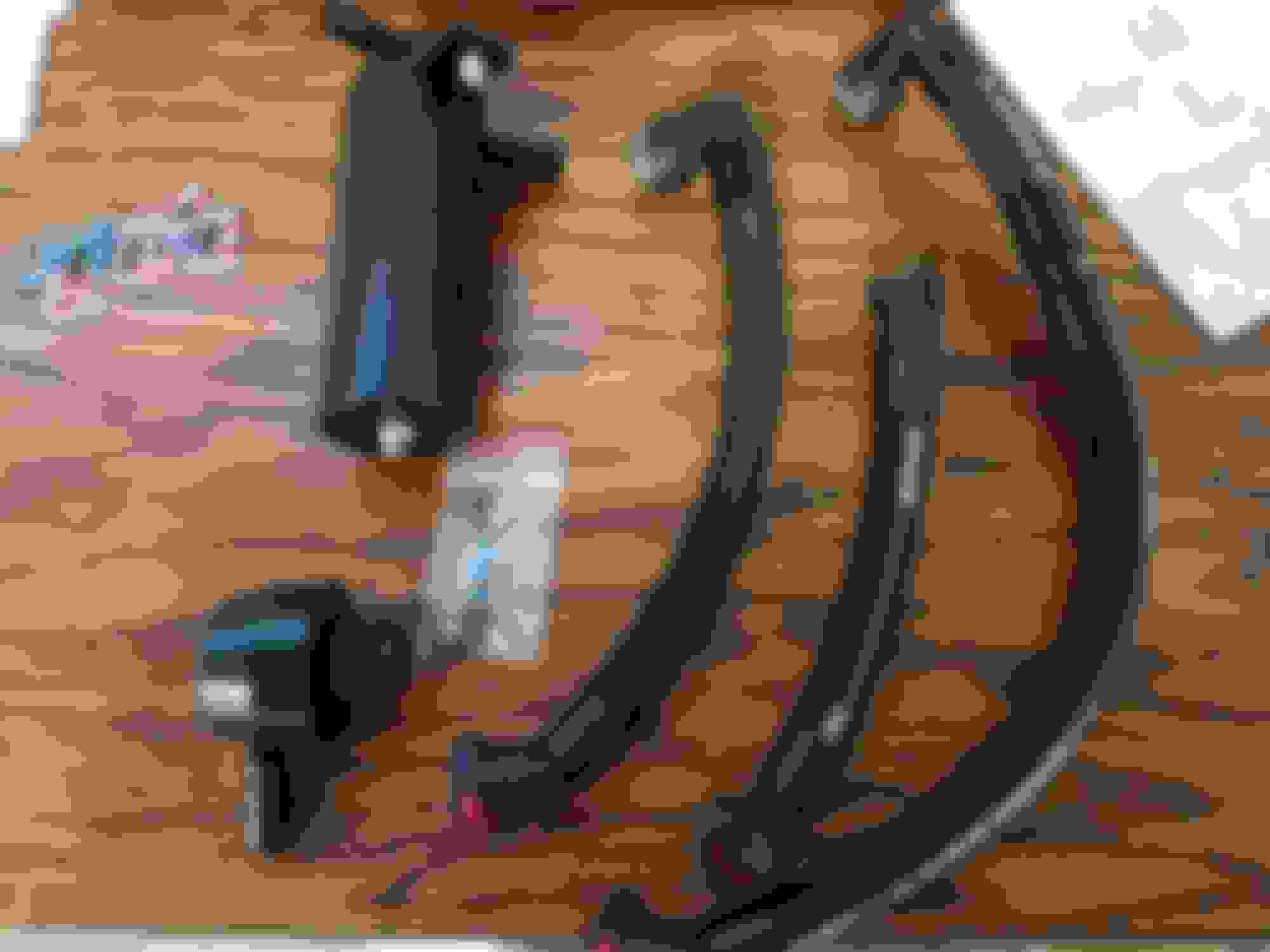
Overall my first impression, very nice hoses and fittings. fitment was okay. Was very disappointed that they didn't include a paper invoice, and more importantly no instructions! I then searched online and couldn't find any instructions..... (I plan on making a youtube video going over the install very soon)
Anyways, here's my couple of quick pictures so you can see the product.
I will update on any fuel economy gains, as well as my first drain on the catch can at some point in the future.
I'd also try a lower volatility oil if you can find the specs on it. ( Amsoil?)
I just bought the 3.3L version and I'd be disappointment to know that the same injector principle applies to it, and i couldn't see why it wouldn't (?)
I guess it shouldn't be an issue because both injectors are always firing in a ratio of high to low. Below is an article/excerpt that states that.
Guess time will tell as as the saying goes. Good idea to hedge your bets though, and use the "can" and using lower NOACK oil. My 2 cents. I ordered up Pennzoil Ultra for the first oil change.
Peter Dowding, Ford’s chief engineer of powertrain gasoline systems, revealed a different strategy. Ford uses PI alone at idle and at low rpm for smooth, quiet, and efficient engine operation. As rpm and load increase, fuel delivery becomes a programmed blend of PI and DI. In contrast to Toyota’s methodology, Ford’s PI is always operating, responsible for at least 5 to 10 percent of the fuel delivery.
Peter Dowding, Ford’s chief engineer of powertrain gasoline systems, revealed a different strategy. Ford uses PI alone at idle and at low rpm for smooth, quiet, and efficient engine operation. As rpm and load increase, fuel delivery becomes a programmed blend of PI and DI. In contrast to Toyota’s methodology, Ford’s PI is always operating, responsible for at least 5 to 10 percent of the fuel delivery. Dowding and his Ford engineering colleague Stephen Russ stress that carbon deposits on tailpipes and intake valves have never been an issue in their DI engines.
I very much disagree with "not having issues" with DI. The EB 3.5 Gen1 was plagued with carbon deposits, and subsequent driveability concerns directly related to carbon deposits due to blow by, and no port fuel to help clean things up.
Same is true for the family of 2.0 4Cyl EB options as well
Yeah, it worries me still. I hope to put 200k + on it, trouble-free, like my other other F150. For some reason my instinct tells me otherwise: Plastic intake and oil pan for starters.
I thought I'd also mention I had a 4.6 Triton in an F150 ( My last truck) and I used BP gas since 2015 ..... in 2 years time I had to pull the intake for a vacuum leak; and it was spit shine, shiny, in those ports after 2 years of run-time. Looked good and BP lived up to their claim of its cleaning power.
I've always run Motorcraft 5w20 in all my Ford vehicles. I don't have plans to stray from it. To me its high quality oil, and a good bang for the buck compared to other high end oils