


Front Suspension Tips

Thread Starter
|
Member
Joined: Mar 2021
Posts: 12
Likes: 0
 Front Suspension Tips
Hey guys,
I'm getting ready to head off to college and before I go (over 1,000 miles) I'm redoing most of my front suspension:
Any tips on what extra stuff to bring on such a trip would be helpful too (mainly thinking fuel pump since I've heard that to be a common failure, I just don't know if it's original or not)
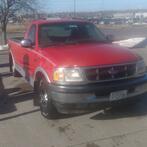
1997,4.2 V6, RWD, Single Cab, Long bed, XLT ~158k miles.
(Did shocks a few months ago, since they were easy)
Springs and Ball joints are main points of concern. (one side droops when I jack it up, (the spring is bent I guess), and the ball joints are just worn out)
Also doing upper control arms and possibly Tie rods.
I bought a large kit of all the parts last fall, just never got to do it before the winter. Just looking for some tips on what all I need to do.
Mainly tools needed and torque specs.
I know I'll need to rent/borrow: Ball joint press (possibly a grease gun), spring compressor, and tie rod puller If I do those.
What all larger sockets will I need and what tricky things to be prepared for?
How long will this probably take? ( I have 4 days off to do it so I'm not too worried.)
(I have an 1/2in. Milwaukee M12 Impact wrench, which I would hope can get most things off)
Link to kit I bought last October:
Planning on an alignment afterwards (Will I still need one if I don't do the tie rods?)
Any help or tips are gladly accepted.
I'm getting ready to head off to college and before I go (over 1,000 miles) I'm redoing most of my front suspension:
Any tips on what extra stuff to bring on such a trip would be helpful too (mainly thinking fuel pump since I've heard that to be a common failure, I just don't know if it's original or not)
1997,4.2 V6, RWD, Single Cab, Long bed, XLT ~158k miles.
(Did shocks a few months ago, since they were easy)
Springs and Ball joints are main points of concern. (one side droops when I jack it up, (the spring is bent I guess), and the ball joints are just worn out)
Also doing upper control arms and possibly Tie rods.
I bought a large kit of all the parts last fall, just never got to do it before the winter. Just looking for some tips on what all I need to do.
Mainly tools needed and torque specs.
I know I'll need to rent/borrow: Ball joint press (possibly a grease gun), spring compressor, and tie rod puller If I do those.
What all larger sockets will I need and what tricky things to be prepared for?
How long will this probably take? ( I have 4 days off to do it so I'm not too worried.)
(I have an 1/2in. Milwaukee M12 Impact wrench, which I would hope can get most things off)
Link to kit I bought last October:

Planning on an alignment afterwards (Will I still need one if I don't do the tie rods?)
Any help or tips are gladly accepted.
Last edited by Plerp Isaiah; Jun 30, 2021 at 08:39 PM.

Senior Member
Joined: Jan 2002
Posts: 5,994
Likes: 221
From: Wilmington,NC
Since you are replacing the tie rod ends you can hammer the threaded end to get them out without a special tool. Check the idler arm and pitman arm for play. The idler arm is probably worn. The sway bar bushings are probably in need of replacement but you can buy those anywhere. Fuel pumps can last a very long time or fail any time. My 2000 still had its original fuel pump at 170k when I lost track of it and my current truck has 166k on the OE pump. You have to drop the tank or raise the bed to replace it so just having the pump with you isn't going to help that much. When replacing the tie rod ends, count the number of turns when they are unscrewed and install with the same number of turns. This will probably keep the alignment close enough to drive to a shop for a better alignment. And when replacing tie rod ends and ball joints the tapered fittings should not be tightened that much, just snugged up good.

Technical Article Contributor
Joined: Jan 2007
Posts: 10,636
Likes: 264
From: Vernon, NY
Nice truck you've got there!
I would still do an alignment after replacing those parts. Nothing like driving a long ways with a crooked steering wheel or a truck that wants to take you into traffic or off into a ditch. Gets old if you are tired when driving long distances. Not to mention you want your tires to last as long as possible (especially right now in the times we are all in, unfortunately).
Another option on the fuel pump is to cut a square hole in the bed, then get a piece of equivalent sheet metal, bolt it in, and paint to match it. This way you have quicker access to it. A drill and a jigsaw with a metal blade makes cake work of it. Just look out for hoses, wiring, and the fuel tank below it.
Do you got more pics of your truck? (Betcha you didn't think someone would ask for pics of your old truck! )
)
I would still do an alignment after replacing those parts. Nothing like driving a long ways with a crooked steering wheel or a truck that wants to take you into traffic or off into a ditch. Gets old if you are tired when driving long distances. Not to mention you want your tires to last as long as possible (especially right now in the times we are all in, unfortunately).
Another option on the fuel pump is to cut a square hole in the bed, then get a piece of equivalent sheet metal, bolt it in, and paint to match it. This way you have quicker access to it. A drill and a jigsaw with a metal blade makes cake work of it. Just look out for hoses, wiring, and the fuel tank below it.
Do you got more pics of your truck? (Betcha you didn't think someone would ask for pics of your old truck!
)
Thread Starter
|
Member
Joined: Mar 2021
Posts: 12
Likes: 0
Since you are replacing the tie rod ends you can hammer the threaded end to get them out without a special tool. Check the idler arm and pitman arm for play. The idler arm is probably worn. The sway bar bushings are probably in need of replacement but you can buy those anywhere. Fuel pumps can last a very long time or fail any time. My 2000 still had its original fuel pump at 170k when I lost track of it and my current truck has 166k on the OE pump. You have to drop the tank or raise the bed to replace it so just having the pump with you isn't going to help that much. When replacing the tie rod ends, count the number of turns when they are unscrewed and install with the same number of turns. This will probably keep the alignment close enough to drive to a shop for a better alignment. And when replacing tie rod ends and ball joints the tapered fittings should not be tightened that much, just snugged up good.

Member


Joined: Jun 2019
Posts: 36
Likes: 2
From: Oklahoma City
21 or 22 mm combination wrenches and sockets, the biggest breaker bar you can find, plus a common metric socket set that goes to 18mm. Also a paint pen and a small pitman arm puller. You'll probably want a tiny ratchet and a big one. Also get a set of snap ring pliers, and some penetrating oil. I recommend the "maintenance free" ball joints, the other type are difficult to access with a grease gun. If you have front antilock brakes, you'll need a set of metric Allen wrenches. You will also need jack stands and possibly a second trolley jack, this eliminates the need to disconnect the springs or torsion bars. Oh, on the 4x4 models, I think the axle nut is 36 mm, you'll need a socket for that on either model but the 4x2 axle nuts are much smaller. Bailing wire is always a necessity.
You change the upper control arm and ball joint as an assembly. The night before you take any of this apart, hose down the lower ball joints with penetrating oil.
Start by loosening the lug nuts and axle nut, then pull the wheel, the entire brake assembly, and the rotor. Hang the caliper someplace with bailing wire. Don't lose your bearings on a 4x2.
Now is a good time to have the rotors turned and replace the brake pads. Next pull the splash shield and ABS sensor. Unbolt about a three foot section of the wiring. If you want to replace a 4x4 hub, this is a good time but if the ABS sensor is still good, re use it and save the new one.
On the upper control arms, mark the position of the eccentric washers with paint, then crack the bolts loose but do not remove them. Next undo the castle nut on the upper ball joint and separate it from the steering knuckle with the pitman arm puller. The CV axle may fall out of the hub on a 4x4, this is OK just don't tear the boots.
Assembly is the reverse of removal, then you get to do the lowers.
On the lowers, you will leave the control arm and simply press the ball joint out.
Loosen but do NOT remove the castle nut from the lower ball joint and attach whatever pitman arm puller fits. Go get the biggest breaker bar you can find, take it to the store, and tell the parts guy you want something bigger. Use that to turn the pitman arm puller (the puller may break) *carefully*. There WILL be a loud pop when the ballstud breaks free of the steering knuckle. The first time I did this the back end of the bar caught me in the face. I wasn't hurt but my glasses were destroyed. Remove the castle nut then switch back to the bar and puller to work the ballstud loose. Jacking up the lower control arm will help by allowing the weight of the steering knuckle and upper control arm to work in your favor.
Next undo the snap ring on the ball joint. Use the C press with a socket and that big bar to press it *downwards* and out. Sometimes this pops at first too. If you got ball joints with grease fittings, grease them now (do the uppers, too).
Again, installation is just the reverse.
Once it's back together, replace the front tires and have it aligned ASAP.
Last thing, on that particular engine during that time they used a run of faulty front cover gaskets. Replace it.
Aside from that, check your fuel tank straps and see that you BOO switch/master cylinder has had the recall done. You may also get PO171 and PO174, these are often caused by cracked/collapsed vacuum elbows and by failing ladder gaskets. If there are deals on the upper intake mounting bolts, replace the seals if you have to remove the bolts.
If you don't know whether or not the lung nuts have been replaced, replace them.
You change the upper control arm and ball joint as an assembly. The night before you take any of this apart, hose down the lower ball joints with penetrating oil.
Start by loosening the lug nuts and axle nut, then pull the wheel, the entire brake assembly, and the rotor. Hang the caliper someplace with bailing wire. Don't lose your bearings on a 4x2.
Now is a good time to have the rotors turned and replace the brake pads. Next pull the splash shield and ABS sensor. Unbolt about a three foot section of the wiring. If you want to replace a 4x4 hub, this is a good time but if the ABS sensor is still good, re use it and save the new one.
On the upper control arms, mark the position of the eccentric washers with paint, then crack the bolts loose but do not remove them. Next undo the castle nut on the upper ball joint and separate it from the steering knuckle with the pitman arm puller. The CV axle may fall out of the hub on a 4x4, this is OK just don't tear the boots.
Assembly is the reverse of removal, then you get to do the lowers.
On the lowers, you will leave the control arm and simply press the ball joint out.
Loosen but do NOT remove the castle nut from the lower ball joint and attach whatever pitman arm puller fits. Go get the biggest breaker bar you can find, take it to the store, and tell the parts guy you want something bigger. Use that to turn the pitman arm puller (the puller may break) *carefully*. There WILL be a loud pop when the ballstud breaks free of the steering knuckle. The first time I did this the back end of the bar caught me in the face. I wasn't hurt but my glasses were destroyed. Remove the castle nut then switch back to the bar and puller to work the ballstud loose. Jacking up the lower control arm will help by allowing the weight of the steering knuckle and upper control arm to work in your favor.
Next undo the snap ring on the ball joint. Use the C press with a socket and that big bar to press it *downwards* and out. Sometimes this pops at first too. If you got ball joints with grease fittings, grease them now (do the uppers, too).
Again, installation is just the reverse.
Once it's back together, replace the front tires and have it aligned ASAP.
Last thing, on that particular engine during that time they used a run of faulty front cover gaskets. Replace it.
Aside from that, check your fuel tank straps and see that you BOO switch/master cylinder has had the recall done. You may also get PO171 and PO174, these are often caused by cracked/collapsed vacuum elbows and by failing ladder gaskets. If there are deals on the upper intake mounting bolts, replace the seals if you have to remove the bolts.
If you don't know whether or not the lung nuts have been replaced, replace them.
