


Truck Shudders


Truck Shudders
Hey guys. Another weird quirk with my truck. Sometimes I get a light shudder at approximately 42.55555555555 mph. I thought it might be a transmission/torque converter problem. After searching around, the only test I read about was to drive in the speed range where the shudder happens and tap on the brake to unlock the TC? However, this yields no results. Speeding up, slowing down or maintaining speed, if it shudders, it only happens in that range.
I'm caught up on most of the maintenance. Motorcraft plugs, new Visteon coils, fuel filter, etc. I still have the original PCV and EGR, tho... No trouble codes as well. I don't think it could be the Royal Purple I'm running, because I did that, like, 25,000 miles ago, and I felt nothing until 4 months ago.
I'm caught up on most of the maintenance. Motorcraft plugs, new Visteon coils, fuel filter, etc. I still have the original PCV and EGR, tho... No trouble codes as well. I don't think it could be the Royal Purple I'm running, because I did that, like, 25,000 miles ago, and I felt nothing until 4 months ago.
It'll shudder in third, too. It's no more severe in either those gears, though. Sometimes I'll coast the truck in neutral on a slight downhill to maintain that speed, and it'll shudder.

Senior Member
Joined: Jul 2004
Posts: 6,200
Likes: 39
From: Easton, Pa.
You have a faulty coil on one or more cylinders.
The reason why gets a bit deep and no it won't set a code.
Finding which one is the labor of love.
Best way is to use a Scanner that can look at mode 6 test 53.
This allows you to look at the misfire monitors for all cylinders and see which one/s are causing the issue.
If the Scanner has a trap feature you can set it up to trap the offending cylinder when your driving. Then you know which one to replace the coil on.
Good luck..
The reason why gets a bit deep and no it won't set a code.
Finding which one is the labor of love.
Best way is to use a Scanner that can look at mode 6 test 53.
This allows you to look at the misfire monitors for all cylinders and see which one/s are causing the issue.
If the Scanner has a trap feature you can set it up to trap the offending cylinder when your driving. Then you know which one to replace the coil on.
Good luck..
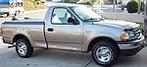


Yea, that's what really threw me off. It's also intermittent. Currently, the only thing obviously wrong with my truck is a rear axle seal that's weeping a bit of oil on the driver's side.

Technical Article Contributor
Joined: Oct 2005
Posts: 25,641
Likes: 19
From: MI
You can Mode 6 now w/$4.95 android app. Gives you the Misfire count per cylinder without a CEL.
Trending Topics
Senior Member
Joined: Jul 2004
Posts: 6,200
Likes: 39
From: Easton, Pa.
The tip-off is when it happens.
During speeds of about 45 and above in OD and 'light throttle', the EGR is active.
This leans out the air-fuel ratio causing the voltage needed under those conditions to be much higher.
When even small added throttle is applied the mixture goes even leaner provoking the misfire.
If a coil has shorted turns it's voltage is reduced but not failed.
This results in the misfire and goes away with large increases in throttle or down shifting.
It can also be temperature sensitive.
Being temporary it does not set a code because it is not a 'hard' failure..
Look at the misfire monitors or set up a trap with some type of diagnostic tool to find the faulty coil/cylinder.
Good luck.
During speeds of about 45 and above in OD and 'light throttle', the EGR is active.
This leans out the air-fuel ratio causing the voltage needed under those conditions to be much higher.
When even small added throttle is applied the mixture goes even leaner provoking the misfire.
If a coil has shorted turns it's voltage is reduced but not failed.
This results in the misfire and goes away with large increases in throttle or down shifting.
It can also be temperature sensitive.
Being temporary it does not set a code because it is not a 'hard' failure..
Look at the misfire monitors or set up a trap with some type of diagnostic tool to find the faulty coil/cylinder.
Good luck.


Senior Member
Joined: Sep 2013
Posts: 108
Likes: 0
The tip-off is when it happens.
During speeds of about 45 and above in OD and 'light throttle', the EGR is active.
This leans out the air-fuel ratio causing the voltage needed under those conditions to be much higher.
When even small added throttle is applied the mixture goes even leaner provoking the misfire.
If a coil has shorted turns it's voltage is reduced but not failed.
This results in the misfire and goes away with large increases in throttle or down shifting.
It can also be temperature sensitive.
Being temporary it does not set a code because it is not a 'hard' failure..
Look at the misfire monitors or set up a trap with some type of diagnostic tool to find the faulty coil/cylinder.
Good luck.
During speeds of about 45 and above in OD and 'light throttle', the EGR is active.
This leans out the air-fuel ratio causing the voltage needed under those conditions to be much higher.
When even small added throttle is applied the mixture goes even leaner provoking the misfire.
If a coil has shorted turns it's voltage is reduced but not failed.
This results in the misfire and goes away with large increases in throttle or down shifting.
It can also be temperature sensitive.
Being temporary it does not set a code because it is not a 'hard' failure..
Look at the misfire monitors or set up a trap with some type of diagnostic tool to find the faulty coil/cylinder.
Good luck.
I would also arm myself with shift parameters and sequence for a better understanding. These can vary within model according to build date and there may even be an update. Although such is typically listed by VIN, I've found many inaccuracies searching by that method.
Examples: 09 Malibu with braking/ESC/anti-lock issues. Issue dated all the way back to 96 Aurora where a fix was made because voltage spikes were eating brake control modules. A short jumper harness with diodes to block the spikes created by the cooling fan motors as they cycled was added. Someone forgot about it when they designed the Malibu but they came up with the same exact fix but my VIN was not included. And it did not have the diodes wired into the system as shown on applicable wiring diagram.
10 Lincoln MKS. TSB pertaining to rear caliper issues and brake drag had a cutoff date three days before my vehicle. I had the issue and believe they just continued to use the old parts already in the production system.
So, widen your search a bit beyond applicable VIN.
Could a rear limited slip differential cause a shudder while driving in a straight line?
I replaced my rear axle seals, and I put new fluid in. I put Royal Purple in again to make sure I didn't change any variables. I drove it 15 miles and it didn't really do anything at 40-45 mph. I wasn't really expecting to fix the shudder, I just wanted to stop the leak.
I never put Ford friction modifier in the first time, and I did not put any in this time.
I replaced my rear axle seals, and I put new fluid in. I put Royal Purple in again to make sure I didn't change any variables. I drove it 15 miles and it didn't really do anything at 40-45 mph. I wasn't really expecting to fix the shudder, I just wanted to stop the leak.
I never put Ford friction modifier in the first time, and I did not put any in this time.